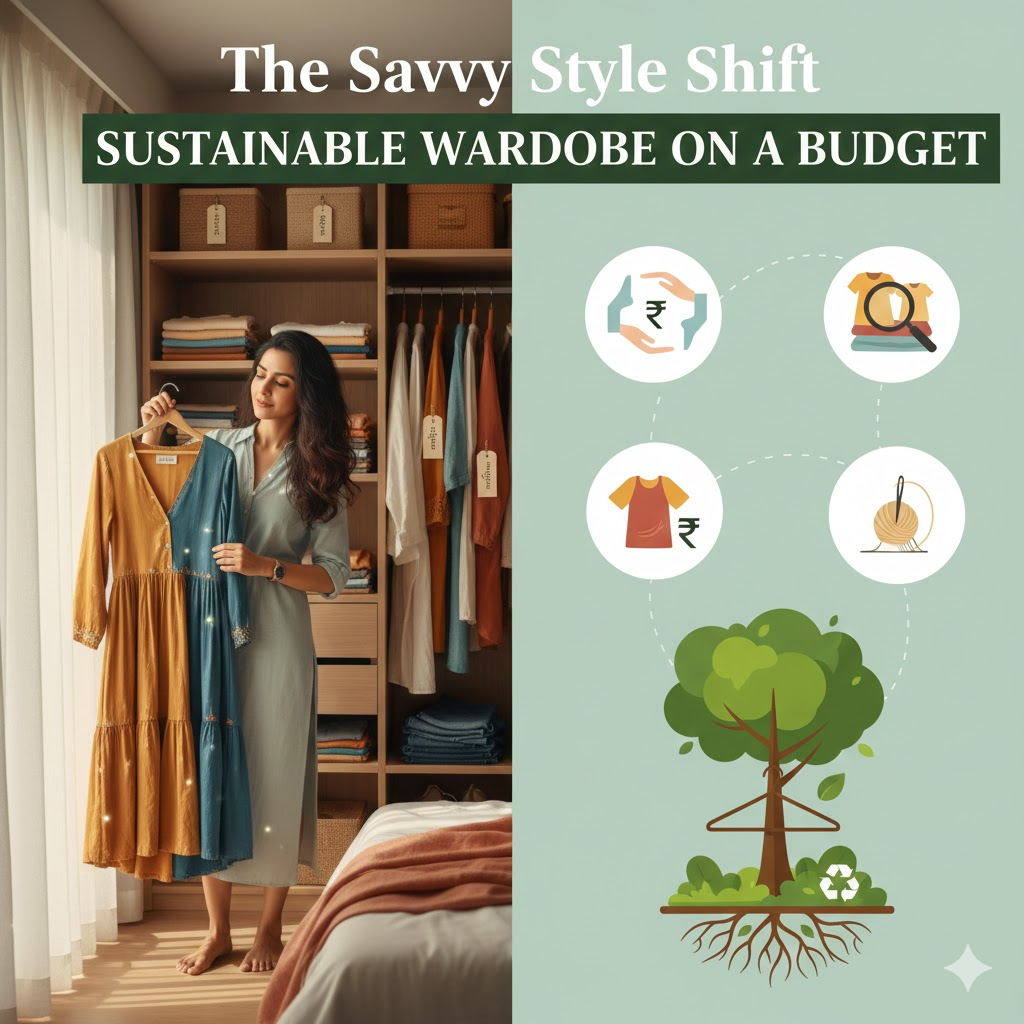
The world of fashion often feels like a non-stop treadmill, where the latest trend demands a constant cycle of buying, wearing once, and discarding. But what if you could have a closet full of clothes you genuinely love, save money, and help the planet?
Building a sustainable wardrobe on a budget might sound like a paradox, but it’s entirely possible. It’s about moving from “Fast Fashion” to Slow Fashion—a journey often best understood through a personal story.
The Story of Priya’s Closet Revolution
Priya, a software professional from Bangalore, was a classic Fast Fashion consumer. Her wardrobe was bursting with inexpensive, trendy clothes, yet she always felt like she had nothing to wear.
“I used to spend nearly ₹5,000 every month just on impulse buys,” she recalls. “The shirts would tear after three washes, the colours would fade, and the fit was never quite right. I was literally throwing money into a landfill.”
The turning point came when she moved apartments and realised she was transporting boxes of unworn, forgotten clothes. That day, Priya decided to stop the cycle. Her mission was simple: a beautiful, ethical, and affordable wardrobe.
Priya’s Budget-Friendly Action Plan:
- The Closet Audit: She first donated 70% of her fast-fashion items that were still in good condition.
- The Saree Saviour: She rediscovered her mother’s heirloom silk sarees. Instead of discarding them, she worked with a local tailor to transform two of them into a stunning cocktail dress and a pair of chic wide-leg pants.
- The 5-Piece Rule: For the next three months, she allowed herself to buy only five high-quality, versatile items: a linen kurta, a pair of classic organic cotton jeans, two natural-dyed cotton tees, and a neutral-toned jacket.
- Thrift & Swap: She started using online thrift groups to find pre-loved designer pieces and participated in clothing swaps with her friends, refreshing her look without spending a rupee.
Within six months, Priya had halved her clothing budget, owned a wardrobe of pieces that truly reflected her style, and felt a profound sense of pride in her conscious choices. Her closet was smaller, but her style was bigger.
5 Practical Steps to Build Your Sustainable Wardrobe (Without Breaking the Bank)
You don’t need a huge bank account to embrace ethical fashion. The core of a sustainable wardrobe is mindfulness, not money. Here is your action plan:
1. 🔍 The Wardrobe Audit: Shop Your Own Closet
Before you buy anything new, you must know what you already have.
- The Three Piles: Sort your clothes into Keep (love and wear often), Repair/Upcycle (needs a button, a hem, or a new look), and Donate/Sell (still wearable, but not for you).
- Identify Gaps: Only after this process will you know what you genuinely need. This prevents accidental duplicate buys.
2. 💸 Embrace the Circular Economy: Thrift, Swap, & Rent
This is the most budget-friendly way to shop sustainably.
- Thrifting is Trending: Look for reputable online thrift stores and Instagram pages in India (the culture is growing fast!). You can find high-quality, gently used items at a fraction of the retail price.
- Host a Swap: Organise a ‘swap party’ with friends. Everyone brings clothes they no longer wear and trades them. Free wardrobe refresh!
- Rent for Occasions: Need a stunning lehenga or an expensive suit for one wedding? Rent it! Rental services drastically reduce the cost-per-wear and textile waste.
3. ✨ Value Over Volume: Invest in Timeless Basics
Fast Fashion is cheap upfront but expensive over time because those garments don’t last. Quality over quantity is the Slow Fashion mantra.
- Cost-Per-Wear (CPW) Analysis: Calculate the true value: $$\text{Cost Per Wear} = \frac{\text{Price of Garment}}{\text{Number of Times Worn}}$$
- A ₹500 fast-fashion top worn 5 times costs you ₹100/wear.
- A high-quality ₹3,000 linen kurta worn 100 times costs you just ₹30/wear.
- Go for Versatility: Choose pieces in neutral colours (white, black, beige, navy) and classic silhouettes that can be mixed, matched, and layered across seasons.
4. 🧵 The Indian Advantage: Upcycle and Rediscover Handlooms
India is a powerhouse of traditional, inherently sustainable textiles.
- Saree Upcycling: Take inspiration from Priya! Old silks, cottons, and bandhanis can be cleverly repurposed into jackets, skirts, or even home furnishings. Find a trusted local tailor (the ultimate slow-fashion hero) for custom fits.
- Support Handloom: Invest in durable, earth-friendly fabrics like Khadi, Organic Cotton, and Linen. Buying these supports local artisans, reduces carbon footprint, and gives you a breathable garment perfect for the Indian climate.
5. 🧼 Care, Mend, Repeat: Longevity is Key
The most sustainable item is the one you already own. Extending the life of your clothes is an act of sustainability.
- Washing Wisdom: Wash clothes in cold water, use mild, biodegradable detergents, and air-dry them whenever possible to save energy and protect the fabric’s integrity.
- Learn the Basics: Learn to sew a button, mend a small tear, or re-stitch a falling hem. This small skill saves garments from the discard pile.
🌟 Your Sustainable Style Statement
Building a sustainable wardrobe on a budget is not about instant gratification; it’s about intentionality and creating a personal style that lasts. Like Priya, every conscious choice you make—from thrifting a dress to upcycling a beloved saree—is a vote for a healthier planet and a more fulfilling wardrobe.
Which of these five steps will you take first to start your Slow Fashion revolution?


No responses yet