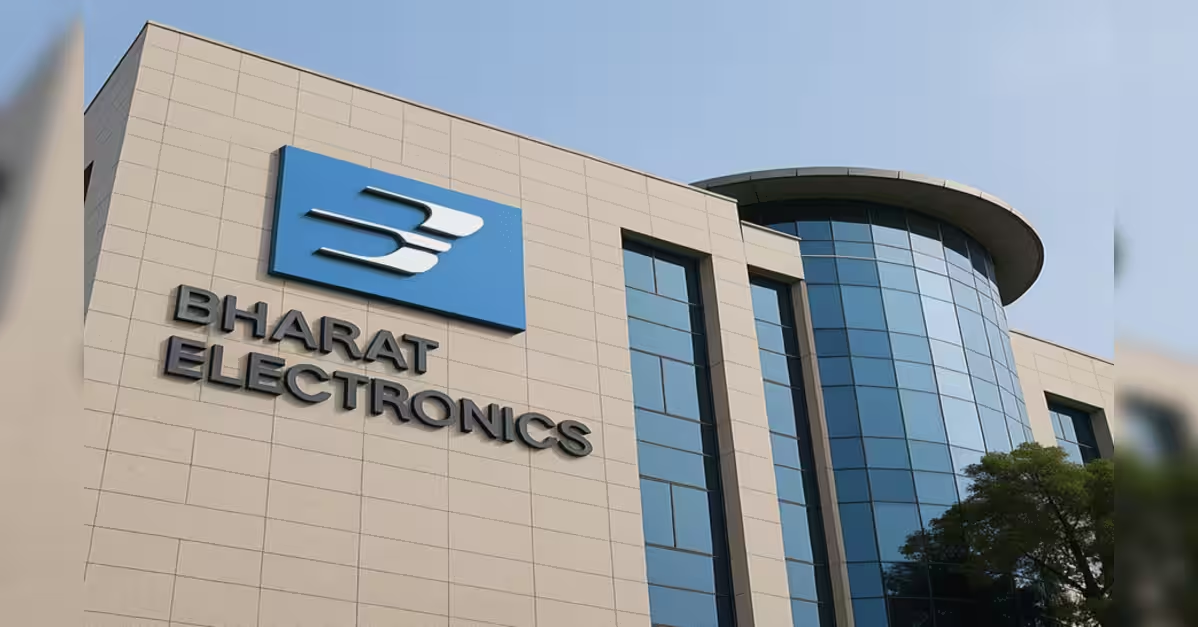
Bharat Electronics Limited (BEL), the Bengaluru-headquartered Navratna Defence Public Sector Undertaking, has told stock exchanges it has secured additional orders worth Rs 648 crore since its last such disclosure on August 26, 2026. In its filing, the company said:
“Major orders received include Laser based IR jammer, communication equipment, cyber security solution, thermal imager, transducer, AI based software solution, TR modules, upgrades, spares, services etc.”
No spokesperson has been named in the note — this is a standard regulatory disclosure under SEBI’s Listing Obligations and Disclosure Requirements (LODR), which requires listed companies to inform exchanges whenever they win orders above a certain threshold.
Why this is a routine — but telling — disclosure
BEL doesn’t wait for a single mega-contract to make news. Under LODR rules, it discloses cumulative order wins every few weeks, and this cadence itself has become a useful pulse-check on India’s defence-electronics spending. The Rs 648 crore figure is the latest in a fairly steady drumbeat through 2026:
- April 22, 2026 — Rs 569 crore, the opening order haul for FY27, covering avionics, electronic warfare systems and high-energy laser tech.
- June–July 2026 — Rs 572 crore and then Rs 847 crore, spanning electro-optics, seekers and security operations centres.
- August 26, 2026 — Rs 730 crore, including radar, avionics, tank subsystems and perimeter security.
- September 17, 2026 — the current Rs 648 crore, weighted toward jammers, cyber security and AI-based software.
That pattern is documented in BEL’s own newsroom and picked up consistently by financial media — see, for instance, Upstox’s report on the September 17 filing and InvestyWise’s coverage of the same order. BEL’s own past disclosures, such as the Rs 733 crore order from February 2026, follow an identical format — which is why the “no spokesperson attributed” note isn’t unusual; these are filings, not press briefings.
The bigger backdrop: a company running well ahead of last year
This order flow sits on top of a genuinely strong FY27 so far. In Q1 FY27 (April–June 2026), BEL’s consolidated net profit rose about 9% year-on-year to Rs 1,054.34 crore, while revenue from core operations jumped 25% YoY to roughly Rs 5,547 crore, compared with Rs 4,440 crore a year earlier. As of July 1, 2026, the company’s order book — the pipeline of confirmed-but-unexecuted contracts — stood at approximately Rs 72,258 crore, and management has said it expects to exceed Rs 55,000 crore in fresh order inflows for the full year. These figures are drawn from exchange filings summarised on Tickertape and Screener.
For context on scale: in FY26, BEL closed the year with a record turnover of about Rs 26,750 crore (up 16.2% YoY) and total order inflows of roughly Rs 30,000 crore, including export orders worth USD 346 million — details the company laid out in its own year-end note on bel-india.in. A single Rs 648 crore tranche is therefore a small slice of that annual pipeline, not a standalone windfall — but the frequency of these disclosures (roughly one every three to four weeks) is what analysts watch, since it signals whether procurement activity is holding up quarter to quarter.
What’s actually new in this basket of orders
Compared to earlier 2026 disclosures — which leaned on radars, avionics and tank subsystems — this particular order mix is notable for two things:
- Cyber security and AI-based software solutions feature explicitly, alongside more traditional hardware like laser-based IR jammers and thermal imagers. BEL has been building out a software and cyber practice alongside its legacy hardware business, and its inclusion here (rather than being folded into a generic “IT infrastructure” line) suggests these are being booked as distinct line items now.
- TR modules (transmit-receive modules, a core component in active phased-array radar systems) point to continuing radar and electronic-warfare component orders, likely tied to ongoing platform upgrades rather than a new program.
How to read this if you’re an investor
BEL’s stock has had a choppy year: it hit a 52-week high of Rs 473.45 in March 2026 and a 52-week low of Rs 380.45 in December 2025, and was trading around Rs 385–395 in the days around this disclosure — down roughly 10–12% over the preceding six months, per INDmoney’s live price data. At those levels the stock trades at a P/E of roughly 45–46, which is rich for a PSU and prices in continued high growth, not just steady order flow.
A Rs 648 crore disclosure, on its own, is unlikely to move a stock with a market cap north of Rs 2.8 lakh crore. What matters more for anyone tracking the counter is:
- Whether the pace of cumulative order inflow for FY27 stays on track toward management’s Rs 55,000 crore guidance.
- Whether margins hold up — Q1 FY27 EBITDA margin came in at 25.83%, below the company’s full-year target of 28%, which management attributed to product mix rather than cost pressure.
- The growing share of software, cyber and AI-linked orders, which typically carry different margin and repeat-revenue profiles than one-off hardware supply.
None of this is investment advice — it’s simply the context that turns a one-line exchange filing into a readable data point. Anyone using these disclosures to track the stock should treat each one as a small, incremental signal rather than a market-moving event, and weigh it against the quarterly results and order-book trend rather than in isolation.
How to read this if you’re tracking India’s defence-tech buildout
For readers more interested in policy and industrial capacity than the share price, the relevant takeaway is the product mix itself. Orders for laser-based IR jammers, cyber security solutions and AI-based software alongside legacy items like TR modules and thermal imagers reflect a defence-electronics sector that is steadily layering software and cyber capability on top of its traditional hardware base — consistent with the broader indigenisation and R&D priorities BEL’s own management has flagged in recent quarters.


No responses yet