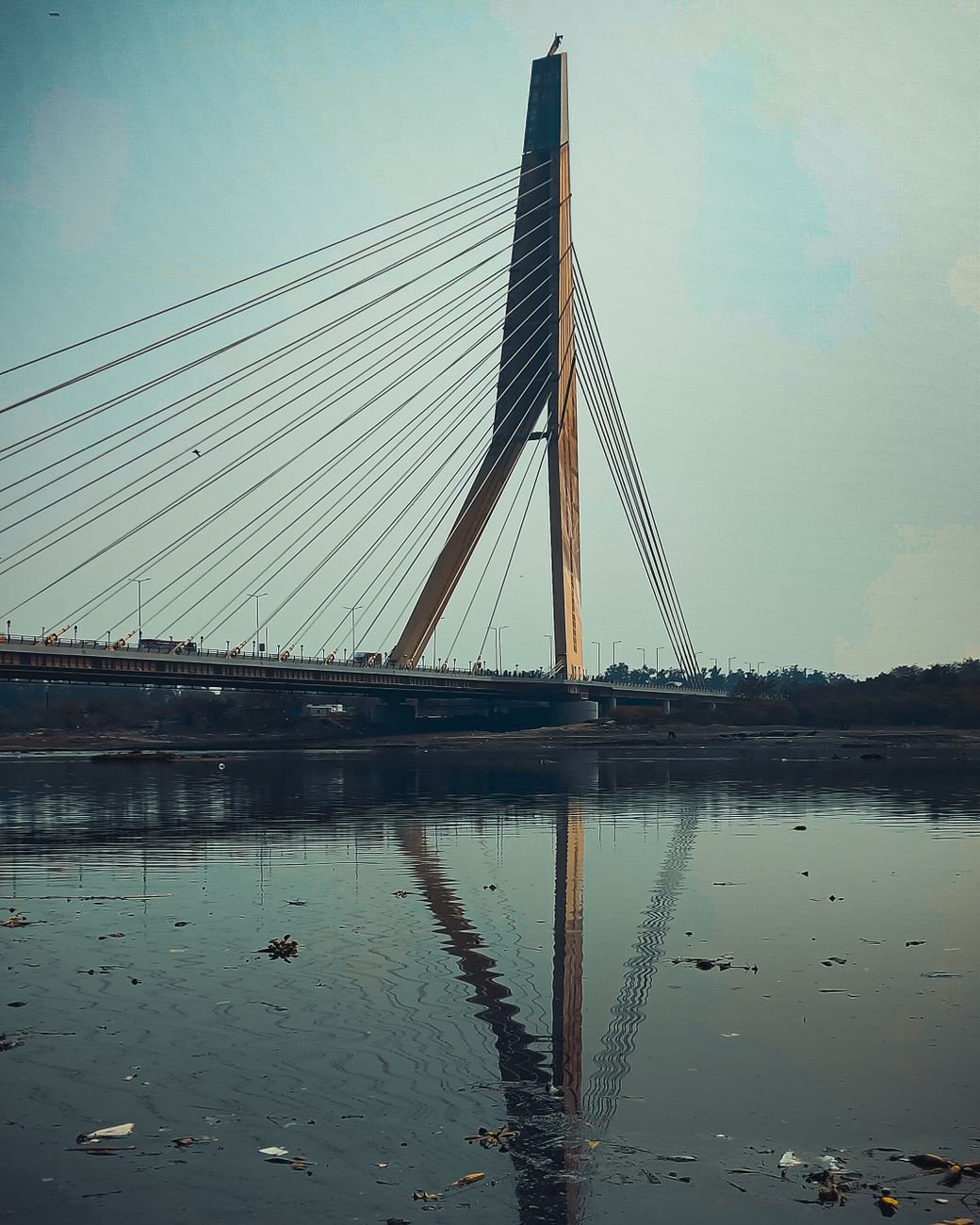
On September 20 — World Cleanup Day — a 21-year-old college student from Madhya Pradesh stepped onto the banks of the Yamuna in Delhi with a group of volunteers and, over four-and-a-half hours, pulled roughly 585 kg of garbage out of the riverbank. It’s a modest number next to the tonnage the Delhi government reports clearing in its official drives, but the person doing the pulling is what makes this story worth telling.
Who is Bittu Tabahi
Surendra Singh Choudhary, known online as Bittu Tabahi, is a second-year BSc student from Biaora in Madhya Pradesh’s Rajgarh district. He began cleaning the heavily polluted Ajnar River near his hometown on Republic Day, January 26, 2026 — alone, with basic tools and often his bare hands, working without swimming ability or proper protective gear. He reportedly dealt with skin infections and encountered snakes along the way, and kept going anyway. He documents the work on Instagram at @bittu_tabahi, where before-and-after images of the Ajnar’s transformation first caught wider attention — the account has grown to roughly 307,000 followers.
That attention snowballed quickly. Industrialist Anand Mahindra publicly praised the effort. Madhya Pradesh Chief Minister Mohan Yadav invited Choudhary to his residence in Bhopal and voiced support for the initiative — a moment that drew its own controversy after YouTuber Dhruv Rathee suggested the CM was trying to claim credit for a private citizen’s work, to which Choudhary responded that the issue wasn’t credit but civic sense, as reported by The Week. Then the story went international: Boyan Slat, founder and CEO of the Netherlands-based nonprofit The Ocean Cleanup, responded to a viral before-and-after post with a public “come work for us,” an offer covered widely, including by Gulf News.
From the Ajnar to the Yamuna
Choudhary’s Delhi debut was deliberate — he’s said he’d wanted to work on the Yamuna for some time, and World Cleanup Day gave him the occasion. Sharing footage of the drive on Instagram, he wrote about the four-and-a-half hours of work and the 585 kg removed, describing a riverbank littered with flowers, garlands, religious offerings and plastic waste — a mix that points to unregulated dumping of ritual waste as much as everyday litter. The video crossed 334,000 views within hours, according to The Tribune’s coverage. Locals joined the cleanup on the ground, and cigarette maker Philip Morris has stepped in as a partner supporting the Delhi leg, with Choudhary announcing the next drive will move to Kherki Daula in Gurugram, per reporting from Aman Shanti News.
A useful contrast: what “official” Yamuna cleanup looks like
It’s worth putting Choudhary’s number next to the government’s. Delhi’s Irrigation and Flood Control Minister Parvesh Verma said in early 2026 that 1,300 metric tonnes of garbage had been cleared from the Yamuna in just 10 days as part of an accelerated state cleanup drive, while a separate NGT-appointed committee reported 1,200 metric tonnes removed in an earlier phase overseen by the Delhi Lieutenant Governor. Those are large, machinery-backed, budget-funded operations — exactly the scale an individual with a garbage bag can’t match, and shouldn’t be expected to.
That’s precisely the point of what Choudhary is doing. He isn’t competing with the state’s tonnage; he’s demonstrating a different kind of intervention — one that doesn’t wait for a government tender, a committee sign-off, or an election promise to get moving. One volunteer with a phone camera and a willingness to show up turned into a crowd of locals on the Yamuna’s bank on a Saturday. That’s a resource no ministry line-item can fully replicate: attention, participation and shame-free social pressure, generated peer-to-peer rather than issued top-down.
Why the social-media layer matters as much as the cleanup itself
It would be easy to read Choudhary’s rise as a story about one determined young man, but the mechanism behind it is really about distributed, community-triggered accountability. His Ajnar River videos were initially dismissed by some as attention-seeking — a criticism that surfaces almost automatically whenever ordinary people do work usually left to government agencies. But the visibility his content generated is exactly what pulled in a corporate partner for the Yamuna leg, drew hundreds of local volunteers to a riverbank on a single day, and put pressure on a state government to publicly respond and claim its own cleanup credentials in turn.
That loop — one person acts, footage spreads, neighbours show up, institutions react — is a genuinely different model from the usual “sign a petition and wait for the municipal corporation” approach to environmental problems. It suggests rivers like the Yamuna, chronically polluted by a mix of untreated sewage, industrial discharge and religious offerings that officialdom has struggled to fully resolve for decades, might respond faster to thousands of small, visible, repeatable community actions layered on top of government infrastructure spending — not instead of it, but alongside it.
The takeaway
Bittu Tabahi’s 585 kg is not going to clean the Yamuna. No single day, by any single group, ever will — Delhi’s own officials cite figures in the thousands of tonnes for a reason. But the model he’s built — document the problem, do the work in public, let the visibility recruit the next volunteer — is one any community, on any river or drain or lakebed in the country, can copy without waiting for a scheme, a minister, or a budget allocation. If that habit spreads faster than the pollution does, it may end up mattering more than the kilogram count from any single afternoon.


No responses yet