Picture a bedroom wall with a stain that returns every monsoon. The paint is repainted, the patch fades, and by next season it is back. The pipe, the leaking joint or the gap in insulation causing it is somewhere behind the plaster, invisible to the eye. Thermal imaging, which turns temperature differences into a picture, is one way inspectors trace such problems without opening the wall. Hikmicro, a thermal imaging specialist, is now pitching a pair of compact handheld cameras at that kind of job: the Eco and the Eco-V.

The company says the two models are aimed at the entry-level segment and at home inspections, and describes them as “surprisingly affordable” for their specifications. The release gives no price or availability for India, so that claim can’t be assessed here.
What the cameras do
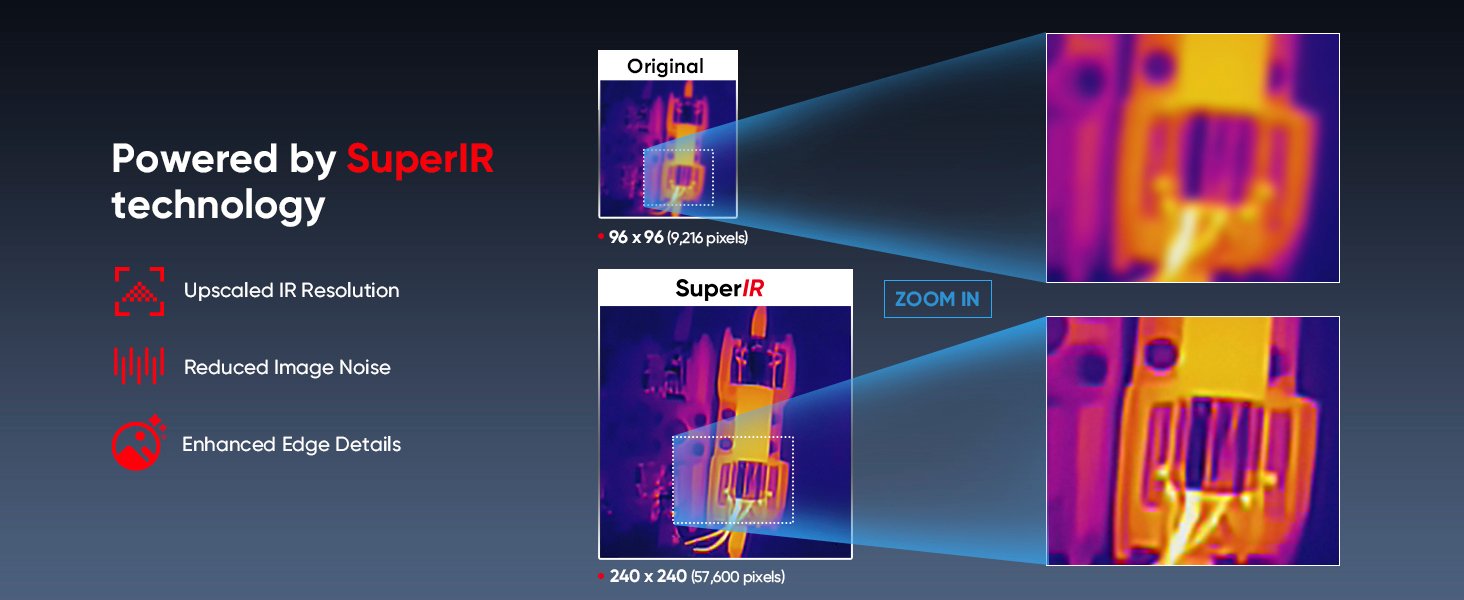
Both models have a 96 x 96 pixel (9,216-pixel) thermal sensor. The company’s SuperIR feature is an image enhancement technology that upscales the live view and stored images to 240 x 240 pixels (57,600 pixels) at 25 Hz. That is processing applied to a 96 x 96 sensor, not a higher-resolution sensor, which is worth bearing in mind when comparing models. The company says the 25 Hz refresh rate is smoother than the 9 Hz often found in simple thermal cameras, which it says makes inspections more tedious.
The Eco measures temperatures from -20 °C to 550 °C with an accuracy of up to ±2 °C or ±2% of reading, according to the company. It stores radiometric thermal images, tracks maximum, minimum and average values, and has a 50° wide-angle lens, which the company says allows larger areas to be scanned for air leaks, water leaks and insulation problems.
Built for site work
Hikmicro lists a laser pointer, 4GB of flash memory for up to 30,000 thermal images, spot, hot-spot and cold-spot presets, and seven colour palettes: White Hot, Black Hot, Rainbow, Ironbow, Redhot, Fusion and Above Alarm. The cameras carry an IP54 rating, are said to withstand drops from 2 metres and come with a three-year warranty. A built-in 3350 mAh battery is rated for up to 8 hours of continuous use, helped by an automatic shut-off (5, 10 or 20 minutes).
What the Eco-V adds
The only listed difference is that the Eco-V adds a 640 x 480 visual camera. That allows a “fusion” mode that blends the thermal image with the real image, and users can switch between thermal, visible and fusion views. Thermal and visual images can be saved together with a single click, which the company says speeds up inspection reports.
Where the company says they can be used
The release lists inspection of household electrical appliances, troubleshooting heating, cooling, ventilation and plumbing, building and HVAC work, searching for insulation faults or water damage in walls, floors and facades, electrical inspections, and “hidden pets in darkness.”
All specifications are the company’s own. The release does not say how the cameras were tested, nor does it compare them with named rivals.


No responses yet