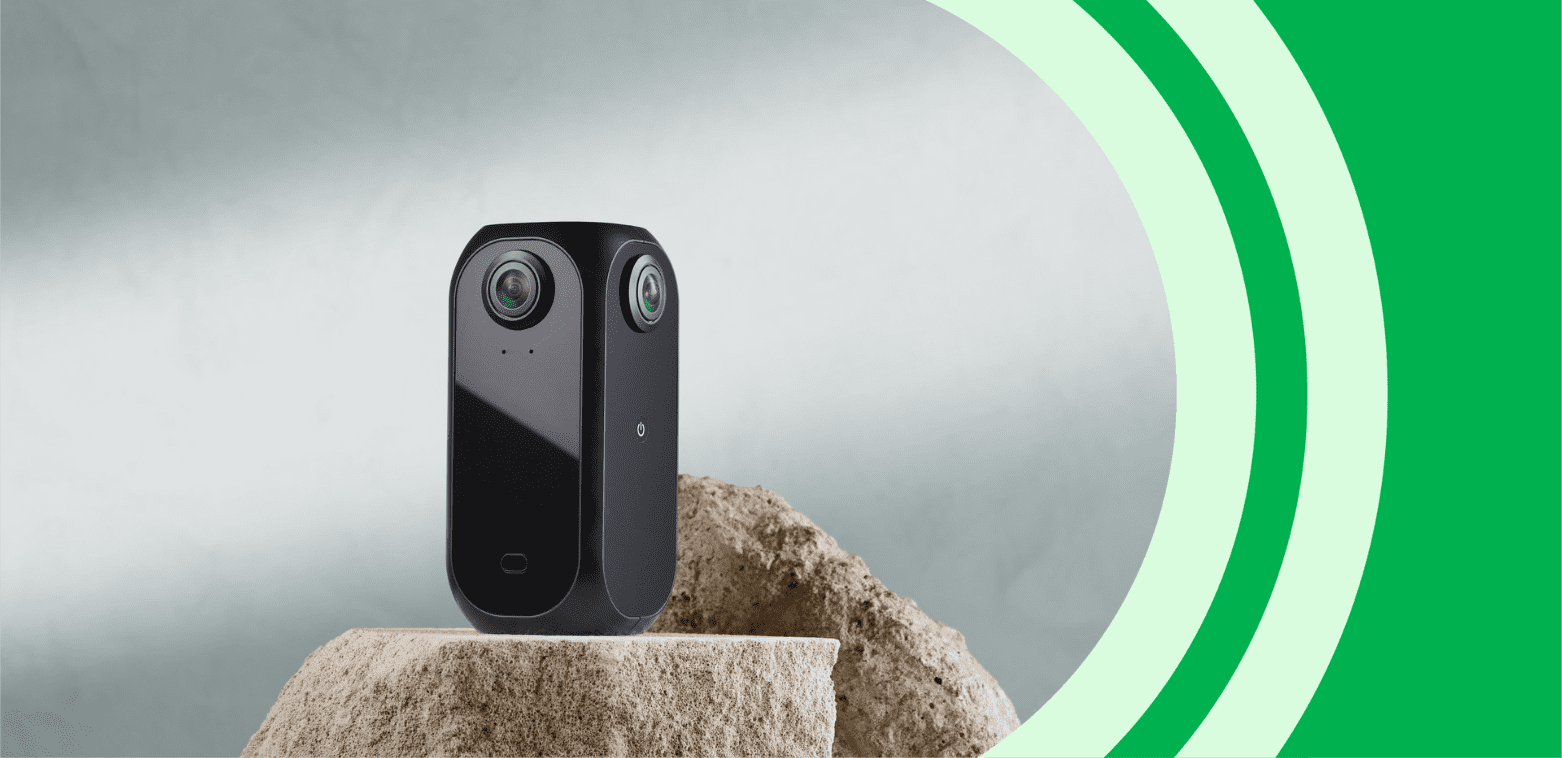
OpenAI has quietly bought a four-person computational-photography startup for north of $300 million — a deal that looks small next to its other bets, but reveals exactly how far the company is willing to go to control the physical device its AI will eventually live inside.
News broke this week, first reported by the Wall Street Journal, that OpenAI has acquired Glass Imaging, a Los Altos-based startup that builds AI-driven camera systems for smartphones. The price tag — believed to exceed $300 million — is striking for a company that had raised only about $30 million since its founding in 2019. For a business with no consumer product and a small team, that’s roughly 10x its total prior funding, paid by a company that isn’t even in the camera business yet. That gap between what Glass Imaging is worth on paper and what OpenAI paid for it is really the story: OpenAI isn’t buying a product, it’s buying a very specific, very scarce kind of expertise, and it’s paying whatever it costs to get it before anyone else does.
Why a camera company, specifically
Glass Imaging’s founders, Ziv Attar and Tom Bishop, aren’t camera-industry generalists. They’re the two engineers who built Portrait Mode at Apple — arguably the single feature that made phone cameras feel “smart” for an entire generation of iPhone users. At Glass Imaging, they’ve spent years applying that same instinct in a different direction: instead of using AI to touch up a photo after it’s captured, their neural networks learn the exact physical quirks of a given camera module — its lens curvature, its sensor noise, its focal limitations — and correct for them the instant the shutter fires. It’s a way of making a tiny, cheap sensor behave like a much larger, more expensive one.
That is a very specific problem to solve, and it’s one that only matters if you’re actually building a physical device with a small camera in it. A software company with no hardware ambitions has no reason to want this. OpenAI clearly does.
The bigger pattern this fits into
This acquisition doesn’t happen in isolation. Over the past 16 months, OpenAI has been assembling, piece by piece, nearly the entire supply chain of a consumer electronics company that used to belong to Apple:
- It paid roughly $6.5 billion in equity for io Products, the hardware startup founded by legendary Apple design chief Jony Ive, bringing Ive and dozens of former Apple staff in-house to lead design across OpenAI’s products.
- It installed former Apple hardware executive Tang Tan — who helped ship multiple generations of iPhone — as its Chief Hardware Officer, reporting directly to Sam Altman.
- By some reports, it has pulled in several hundred additional former Apple employees across design and engineering, enough that Apple has responded with retention bonuses reportedly worth up to $400,000 in stock for members of its own iPhone design team, and a lawsuit against OpenAI alleging misuse of trade secrets.
- It has lined up manufacturing capacity with Foxconn and, at various points, Luxshare — the same contract manufacturers that build iPhones — reportedly for a slate of devices that stretches out toward 2028.
Seen against that backdrop, Glass Imaging isn’t a standalone bet on photography. It’s a component purchase for a device that doesn’t exist yet in public — most likely the screen-free, voice-and-camera “companion” hardware that OpenAI has been previewing in fragments: a pocketable, always-aware object with no display, built to understand its surroundings through a camera and microphone rather than a screen you tap. If that device is going to compete on image quality with an iPhone, and do it inside a smaller, cheaper, more power-constrained body, it needs exactly the trick Glass Imaging has spent seven years perfecting.
What this says about how OpenAI is willing to operate
Three things stand out about the way OpenAI is executing this hardware push, beyond the specifics of any one device:
It will pay a premium far above a startup’s funding history if the expertise is rare enough. A 10x markup over total prior investment isn’t a negotiated valuation in the normal sense — it’s OpenAI deciding that a small team’s specific know-how is worth removing from the market entirely, competitors included.
It is willing to absorb direct legal and reputational conflict with Apple to get talent. The trade-secrets lawsuit and the retention-bonus scramble aren’t a side effect OpenAI stumbled into — they’re the predictable cost of a strategy that involves hiring hundreds of people out of one of the most litigious hardware companies in the world. OpenAI has kept building the team anyway.
It is optimizing for owning the full stack, not just the model. Buying a camera-tuning startup is not something you do if your ambition stops at being the best chatbot. It’s something you do if your ambition is to be the operating system, the hardware, and the intelligence layer all at once — the same vertically integrated bet Apple itself made with the iPhone, just attempted from the opposite direction: model-first, hardware second.
The open questions
None of this confirms a specific product or ship date — OpenAI has not commented on the Glass Imaging deal, and its hardware timeline has already slipped publicly at least once, with an earbud-like device originally floated for a 2026 launch and now facing memory-supply cost pressures and no confirmed FCC filing as of this year. What the acquisition does confirm is intent and appetite: OpenAI is treating hardware as a first-class, well-funded, multi-year bet rather than a side experiment, and it is prepared to spend aggressively, hire adversarially, and buy niche technical teams outright to make sure the device — whenever it actually ships — is good enough to matter.


No responses yet