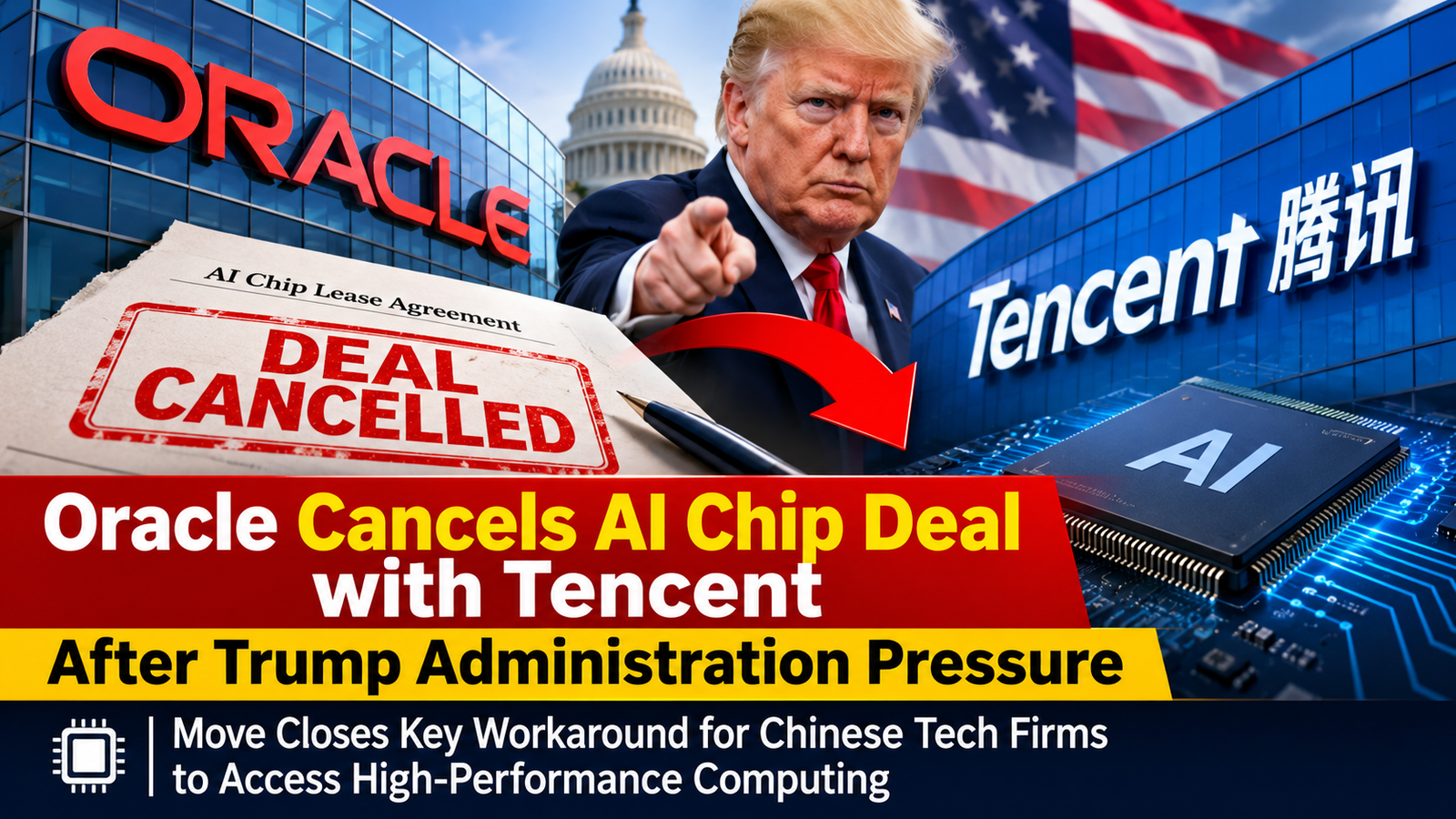
Oracle has cancelled a multibillion-dollar agreement to lease advanced AI chips to Tencent, bowing to pressure from the Trump administration. If confirmed, the reversal closes one of the more visible workarounds Chinese technology companies have used to reach computing power that US and Chinese rules keep out of China.
The FT, citing people familiar with the matter, said US officials approached Oracle with concerns about the deal. Reuters, which carried the report, said it could not immediately verify it. Oracle, Tencent and the White House did not respond to Reuters’ requests for comment.
According to reports at the time, the deal would have given Tencent access to around 100,000 advanced AI chips in several Oracle data centres in Southeast Asia, with roughly 30% of the value paid upfront. The chips were unavailable inside China because of curbs from both Washington and Beijing. Reports on the original deal did not name the chip vendor or model, and neither company had publicly confirmed the contract.
The FT also reported that senior officials in Guangdong, the province where Tencent is based, visited the company and urged it to support Chinese-made chips. That detail suggests pressure on the deal came from both capitals.
What it means for the wider market
For Oracle, the loss matters beyond one customer. The Tencent contract was one of several large, long-term deals underpinning the company’s rapid AI cloud expansion, according to The Next Web, which reported that the build-out is partly funded with debt. It said Oracle recently priced a $20 billion funding round with interest of up to 8.65%, and that its shares have roughly halved over the past year as investors weigh growth against cost. Losing a multi-year commitment of this size tightens the question investors are already asking: how much of the AI cloud backlog depends on customers whose access to the chips may be politically contingent?
The episode also sets a signal for other cloud and data-centre operators. The Next Web, again citing the FT, said Nvidia had a day earlier told its cloud partners to cap Chinese business at 49% of their capacity. Taken together, the two reports point to closer US scrutiny of how Chinese firms reach top AI chips through third parties. Offshore leasing, once seen as a legal grey zone that stayed on the right side of the rules, now looks like a policy target. Operators in Southeast Asia and elsewhere that host US-origin accelerators may face tougher questions from Washington about who their end customers are.
There is a counter-view. The reports rest on unnamed sources, and nothing has been confirmed by the companies or the US government. Existing rules on remote access to restricted compute have not been formally changed in anything reviewed here, and Chinese firms can still buy permitted chips directly; The Next Web noted that ByteDance, Alibaba and Tencent are placing large orders for chips they are allowed to buy.
What it means for China
For Chinese markets, the immediate effect is on Tencent’s compute plans. The company has been raising computing spending to catch up with domestic rivals in AI, according to The Next Web, and a cancelled lease removes a source of high-end capacity it had planned around. It would have to rely more on chips it can buy legally, on capacity inside China, or on domestic accelerators.
That fits the direction Guangdong officials are reported to have urged. If offshore access to leading US chips becomes harder, demand for Chinese-made processors and for the software tools that make them usable is likely to rise, though the performance and supply gap with leading US parts remains a concern for large model training. Whether Tencent’s model development slows, or the company shifts workloads to cheaper or smaller models, will show up in its capital spending and product releases in coming quarters.
The GyanMuse reading is that the cancellation, if accurate, makes compute access a more explicit factor in how Chinese technology companies are valued, alongside revenue and profit. It is a reading of the reports and not a forecast.
What is not known: why Oracle pulled out in the company’s own words, whether any penalties or partial payments are involved, whether Tencent will seek capacity elsewhere, and whether Washington is preparing formal rules on remote access. This article is for information only and is not investment advice.


No responses yet