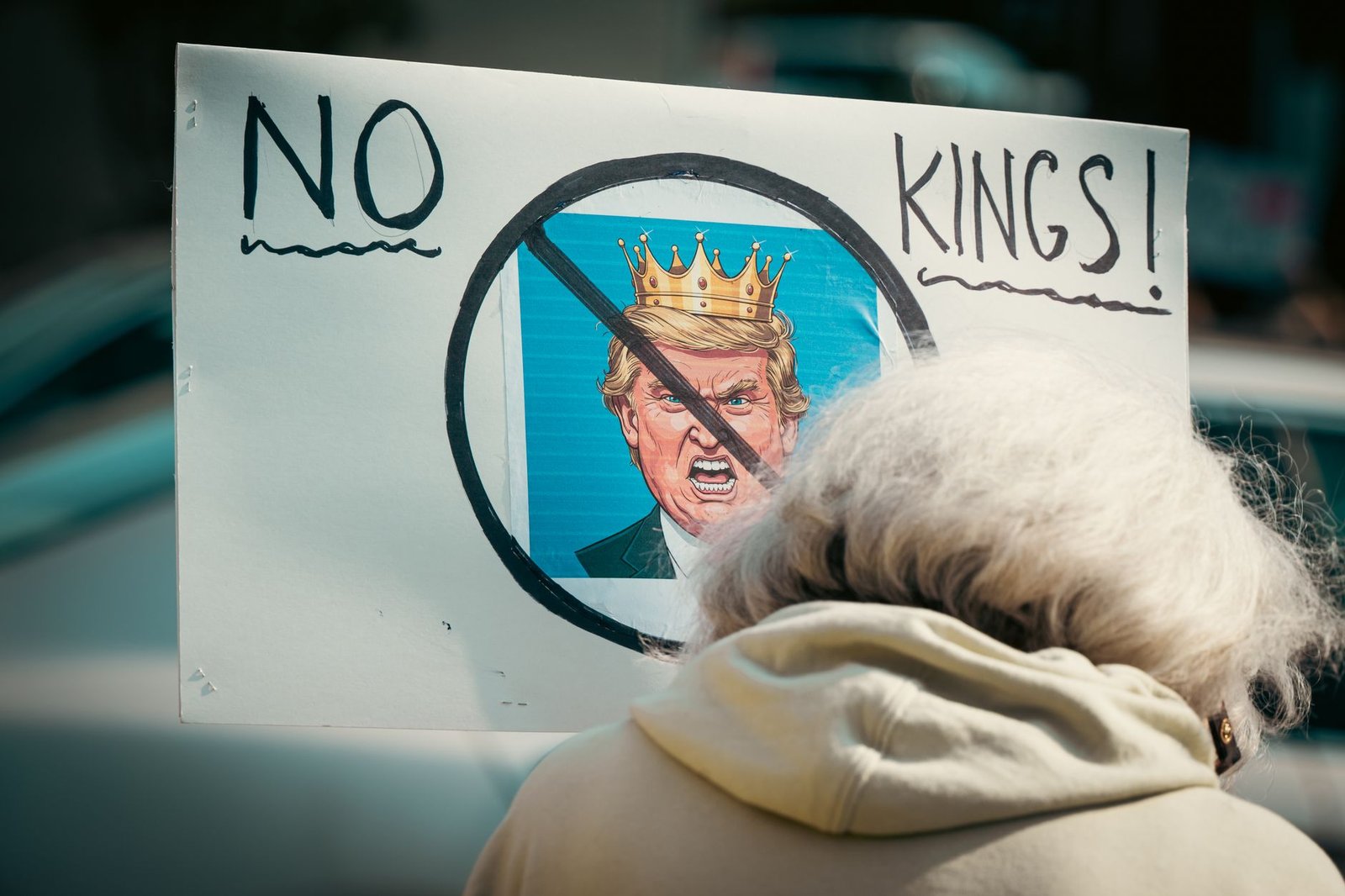
Voters have handed the Democratic Party control of Congress in a sharp rebuke of President Donald Trump, according to CBS News projections, ending the unified Republican control that let him govern largely unchecked since 2025.
The vote changes less about what Trump can do on his own than about what he can get done, what he can hide and what he can force others to accept. For Americans squeezed by prices, and for governments from Tehran to Kyiv to New Delhi that have been waiting on Washington, the next two years look different.
CBS News projected that Democrats gained House control at about 10:15 pm Eastern on Tuesday, and the Senate shortly after 11:30 pm. At its last update, about 75 House races were still undetermined and the Senate contests in Alaska and Mississippi were uncalled. Final seat counts were not yet available, and GyanMuse has relied on projections from outlets rather than certified results. Heading into election day, CBS reported that the House stood at 214 Democrats and 218 Republicans plus one independent who caucuses with them, with two vacancies, and that Democrats needed a net gain of three seats.
CBS’s list of projected Senate flips includes Texas, where James Talarico beat Ken Paxton; Ohio, where Sherrod Brown beat Jon Husted; North Carolina, where Roy Cooper beat Michael Whatley; and Maine, where Troy Jackson beat Susan Collins. Democrats also won governor’s races in Texas, Georgia, Iowa and Ohio, while Republican Byron Donalds won in Florida. Republican Representatives Brian Fitzpatrick and Max Miller lost their seats.
Trump’s response
Trump struck an unusually conciliatory note in some remarks and a defiant one in others. “My message is congratulations to the Democrats, and I look forward to working with you for the good of our country,” he told CBS News, and told Fox News he would accept the results: “Yes, sure I’ll accept them. Why wouldn’t I?” On Truth Social he wrote: “I wasn’t on the Ballot and if I was, we would have won IN A LANDSLIDE!” He warned: “I have the ultimate power — it’s called ‘veto.'” He said he was “a little bit surprised,” blamed weak candidates, said he would not change his Cabinet, and said House Republicans would decide whether Speaker Mike Johnson keeps leading them. CBS reported he has pointed to the Iran war and its effect on energy prices as a drag on his party.
Why voters turned
CBS’s exit-poll findings explain the swing. Trump’s approval was about 38%, on pace to be the lowest for a president in a midterm. About three-quarters of voters were at least dissatisfied with the country’s direction, and more viewed the economy negatively than two years ago. Gas averaged $4.15 a gallon on election day, according to figures cited by CBS. In Maine, 69% of voters said tariffs harmed the local economy.
The economic backdrop is hard. Consumer prices rose 3.7% in September from a year earlier, up from 3.4% in August, according to AP figures. The Federal Reserve raised its key rate a quarter point to about 3.9%, its first increase since 2023. Employers added 29,000 jobs in September, well under the roughly 90,000 economists expected, and unemployment rose to 4.2%. Wages grew 3% over the year, the smallest annual gain since May 2021. The Conference Board’s consumer confidence index rose in October to 91.7 from 84.2, but September’s reading was the lowest since April 2014, and the board’s economist said confidence remained on a long-term downward trend. The Iran war, which AP says began on February 28, sits behind much of the energy-price story.
What Democratic control changes in Washington
Oversight. Control of the House gives Democrats subpoena and investigative power. Representative Robert Garcia, the top Democrat on House Oversight, previewed what is coming with two words: “Lawyer up.” Hakeem Jeffries is expected to become Speaker, and Chuck Schumer could become Senate majority leader. Winning the Senate also lets Democrats block nominees, which reaches to judges and senior officials alike.
Legislation. Trump can still veto, and Democrats are unlikely to have enough votes to override him. The likely result is gridlock on most major bills, with Congress’s real leverage in must-pass measures such as government funding, where fights over shutdowns and spending riders are likely. This is analysis, not a projection of specific votes.
Tariffs
The Supreme Court ruled in February that Trump’s use of the emergency-powers law (IEEPA) to impose tariffs was illegal, and he responded with a temporary 10% global tariff under Section 122, a power that lasts 150 days unless Congress extends it, according to The Wall Street Journal. That window ran into late July. The administration has been rebuilding barriers under Section 301, which requires investigations, and Section 232, which already covers steel, aluminium, cars, trucks and lumber. Roughly $130 billion in IEEPA tariffs had been collected, with more than 1,000 companies petitioning for refunds and no process set by the court.
A Democratic Congress will not repeal those authorities over a veto, but it can block any request to extend temporary tariffs, hold hearings on their cost to households and press on refunds. The sources GyanMuse reviewed do not give the current effective US tariff rate, and trade deals struck under the earlier regime may be affected. Trading partners, including India, will be watching whether Washington’s bargaining position weakens.
The Iran war
The Iran war is the most volatile file. AP reported on November 2 that Trump said a deal was “coming together very nicely,” with Qatar and Pakistan mediating indirect talks. Iran has put forward a seven-step plan covering the reopening of the Strait of Hormuz and a return to nuclear talks, and demands that the US lift its naval blockade of Iranian ports, repeal sanctions and guarantee an end to strikes. Vice President JD Vance said any deal needs a “firm commitment and a verifiable commitment” that Iran will not rebuild its nuclear programme. Trump has repeatedly suggested the US could strike Iran after the election, telling RSBN the war would end “very soon one way or the other.”
The vote raises the political cost of escalation. Democrats can force votes on war powers and use funding bills to question the cost of the conflict. Whether that restrains Trump or pushes him toward a quick settlement before investigations begin is the central unknown. Oil prices have fallen on hopes of a deal, and Trump claimed they dropped nearly $10 a barrel on expectations the war will end.
Ukraine and Russia
Representative Jim Himes, a Democrat, told the Warsaw Security Forum that Democrats “would move quickly to restart aid if they win control of the House.” Breaking Defense’s editor-in-chief cautioned that acting on that could take longer than Democrats hope because of a divided Congress and unfinished spending work. The Kremlin has said US-Russia-Ukraine peace talks would take place in Abu Dhabi after November 4, depending on battlefield conditions, according to Meduza. A Congress ready to fund Ukraine and limit Trump’s deals with Moscow would give Kyiv more bargaining weight and Moscow less reason to wait for concessions.
What it means for the rest of the world
Allies in Europe and Asia now face a president with a weaker mandate at home but undiminished powers over tariffs, sanctions and military action abroad. Expect more reliance on executive actions, and more efforts by foreign governments to deal with Congress directly. For India and other energy importers, the Iran war and oil prices matter most, followed by the shape of US tariffs. For markets, a divided Washington usually means fewer big fiscal surprises and more fights over deadlines, though the reports reviewed do not include market reaction to the result.


No responses yet