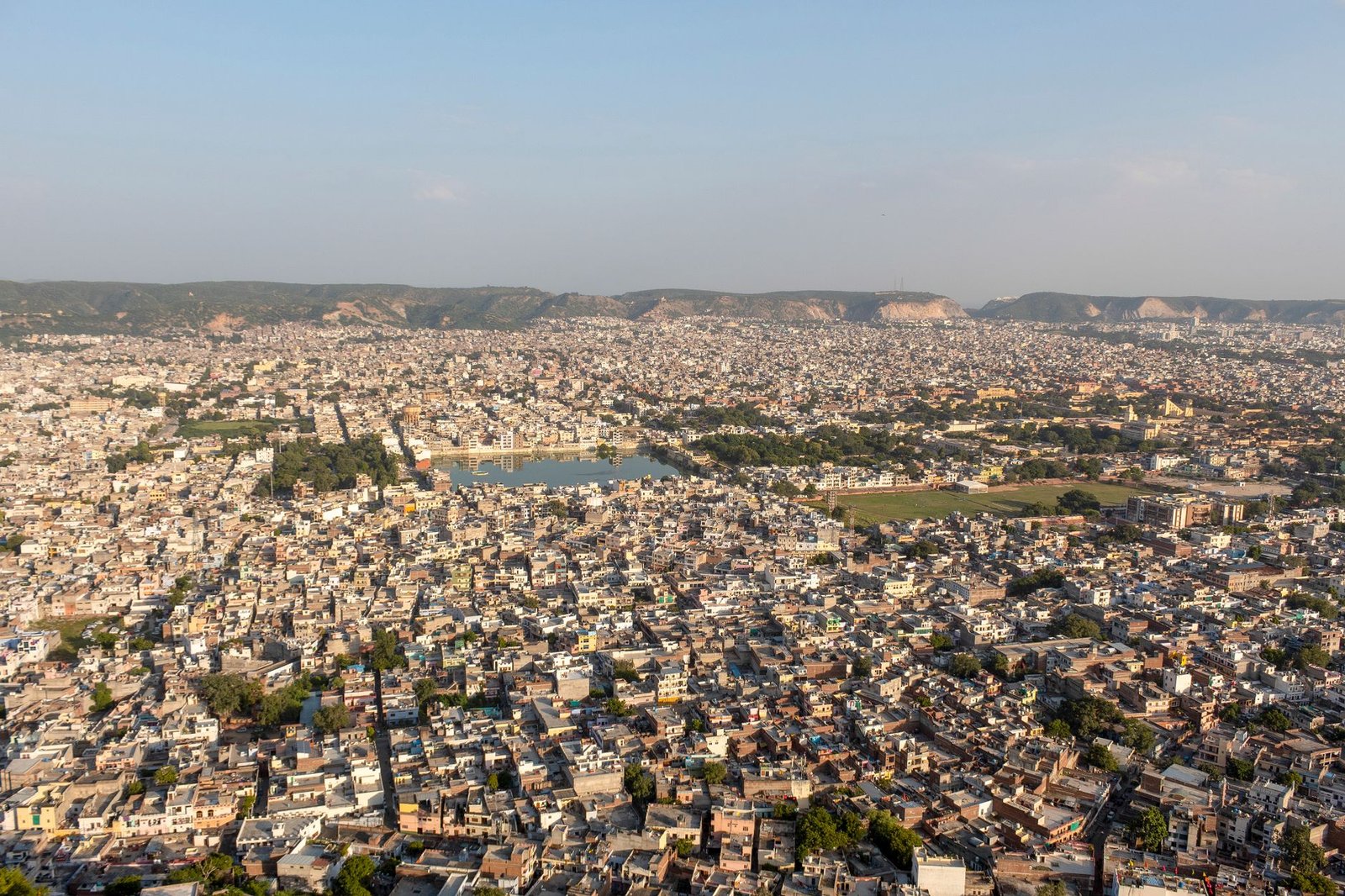
The headline finding is that Hindus will grow more slowly than other groups, but the numbers describe a gradual shift in a country where Hindus remain more than three-quarters of the population.
Pew Research Center has published a long-range projection of the world’s religious populations, and its section on Hindus has drawn attention in India. The report, “The Future of the Global Hindu Population”, is part of a wider study covering 201 countries and territories from 2020 to 2070. Its central finding is that Hindus “will grow at a slower pace than other religious groups”, both in India and worldwide. The numbers behind that sentence are more modest than some headlines suggest, and this article sets out what the study says and what it could mean.
What the study says.
Globally, Hindus are projected to grow by 199 million between 2020 and 2070, to nearly 1.4 billion, while their share of the world’s population slips from 15% to 14%. In India, which was home to about 95% of the world’s Hindus in 2020, the Hindu population is projected to rise by 176 million. Pew’s regional report puts the Hindu share of India’s population at 79% in 2020 and 76% in 2070, and the Muslim share at 15% in 2020 and 20% in 2070. Pew attributes the Muslim increase mainly to Muslims being younger and having more children on average than Hindus. In 2020, the median age of India’s Muslims was 24 and of its Hindus 29.
Fertility is converging, not diverging.
Hindu fertility in India is 1.9 children per woman, close to the national rate of 2.0 and below the replacement level of about 2.1. Pew says it was 3.3 about three decades ago. Globally, Muslim fertility is 3.1 and is projected to fall to 2.2 by 2070. The share shift in India therefore reflects the gap closing gradually, not a widening one. That is Pew’s modelling, and it assumes recent trends continue.
What it could mean.
For policy, the more consequential trend may be age, not religion. With Hindu fertility below replacement and the global rate projected to fall from 2.3 to 2.0, India’s ageing is likely to shape pensions, health spending and the labour force over the coming decades, whichever group is counted. Pew notes that Hindus are projected to gain the most in life expectancy, by 11 years.
For politics, a three-point fall in a majority’s share over five decades is a slow change, but it is likely to be cited in debates over family planning, migration and identity. The projection measures affiliation, not behaviour or attitudes, and says nothing about how people will vote or live. Demographic shares have often been used in public argument in ways the underlying data does not support, and readers should treat claims built on them with care.
For the diaspora, the study projects North America’s Hindu population rising from about 4 million to 9 million, and the United States becoming the world’s fifth-largest Hindu population, adding 4 million. Hindu shares are projected to fall by five or more percentage points in Mauritius, Fiji and Suriname, and Hindus are projected to decline in sub-Saharan Africa and Latin America.
Opposing views and unknowns.
Pew stresses that these are projections, not predictions, and exclude wars, epidemics, disasters and major economic shifts. Other forecasters expect lower fertility than the UN figures Pew used: the Wittgenstein Centre projects a global rate of 1.88 in 2070 and the IHME 1.83 by 2050, against the UN’s 1.99. Faster declines would slow growth for every group. Pew’s India baseline for 2020 is also a projection from the 2011 census, because the 2021 census was delayed, so the starting point carries uncertainty. Critics of demographic forecasting argue that religious identity itself can change and that rising secularisation could enlarge the unaffiliated population beyond these projections, while others argue the fertility gap deserves policy attention. The study does not settle that debate.


No responses yet