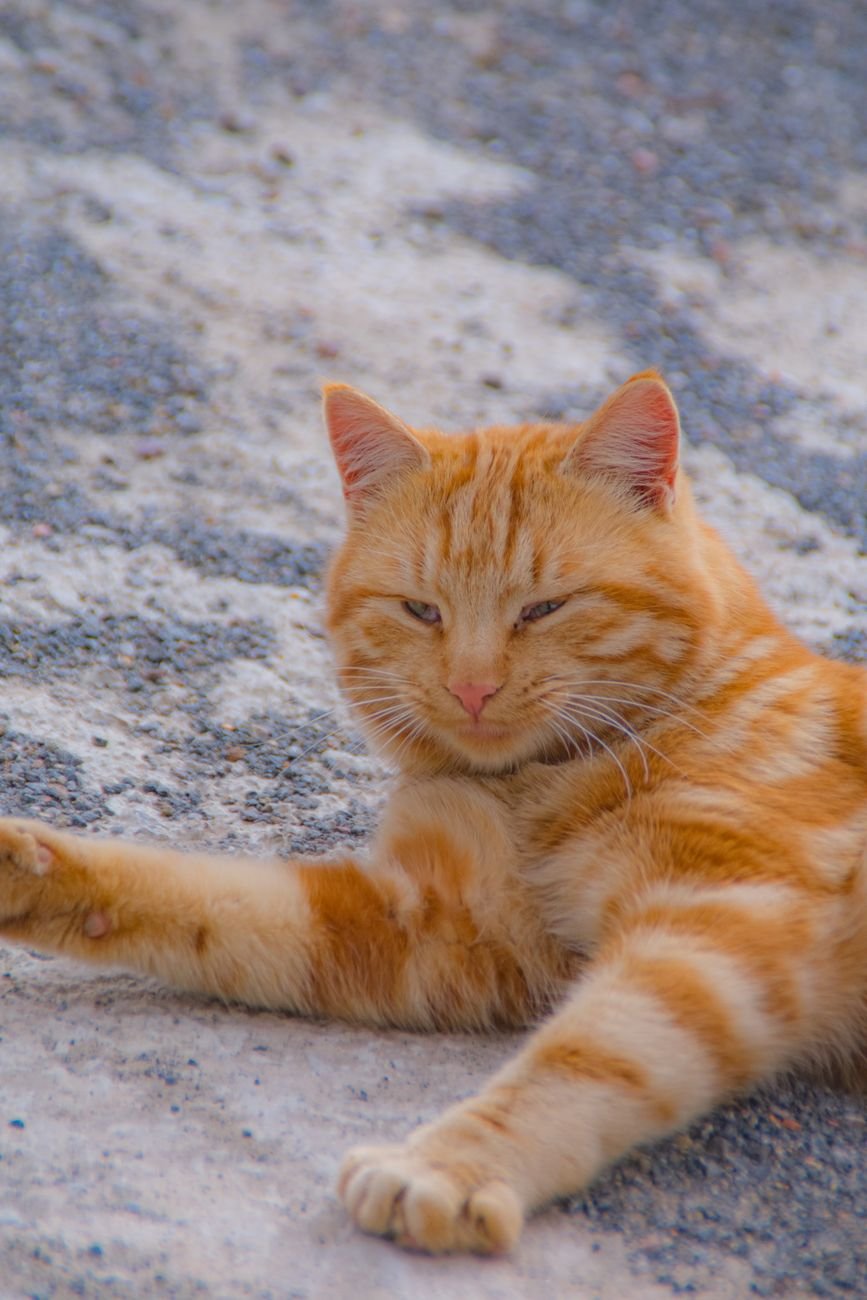
Cats share our sofas, our air and our kitchens. A large international study published in Science suggests they also share some of the genetic changes that drive our cancers, and that this overlap could one day help researchers find better treatments for both species.
The research, led from the Wellcome Sanger Institute in the UK with the University of Guelph in Canada and the University of Bern in Switzerland, is the first large-scale genetic profile of cancers in domestic cats, according to the University of Guelph. The paper, “The oncogenome of the domestic cat” (DOI: 10.1126/science.ady6651), was first reported in February 2026. It resurfaced in news coverage this month, including an ANI report on October 12.
What the researchers did
The team analysed tumour samples from almost 500 pet cats. According to The Scientist, this meant 493 pairs of cancerous and healthy tissue, covering 13 types of cancer. The tissue was mostly material that vets had already collected for diagnosis, and no animals were sampled for the study. The scientists focused on the cat versions of about 1,000 genes known to be linked to cancer in humans, not the whole genome. The Sanger Institute says samples came from the UK, Canada, Switzerland and the USA; other reports say five countries, and the sources reviewed did not name the fifth.
“Despite domestic cats being common pets, there was very little known about the genetics of cancer in these animals,” said Professor Geoffrey Wood of the Ontario Veterinary College, a co-senior author.
The key findings
A shared set of “driver” genes. The researchers identified 31 cancer driver genes that were mutated in more than one sample. Five of them, including TP53, PTEN and FBXW7, acted as drivers across several tumour types, as reported by The Scientist. TP53 was altered in about 33 per cent of cat tumours, close to the 34 per cent seen in a human pan-cancer study, and 20 per cent of cat tumours had lost PTEN, against 25 per cent of human cancers in earlier research.
Breast cancer stands out. In cat mammary (breast) cancer, the team found seven driver genes. The most common was FBXW7, altered in more than half of the tumours. In people, FBXW7 changes in breast cancer are linked to a worse outlook, which the Sanger Institute says parallels what was seen in cats. The second most common driver was PIK3CA, changed in 47 per cent of cat mammary tumours. In human breast cancer, PIK3CA is targeted with drugs known as PI3K inhibitors.
Similarities across other cancers. The team also found overlaps with human cancers of the blood, bone, lung, skin, digestive system and central nervous system.
“One of our major findings was that the genetic changes in cat cancer are similar to some that are seen in humans and dogs,” said Bailey Francis, co-first author at the Sanger Institute.
A first hint on treatment
The researchers also tested drugs. They grew three-dimensional models of feline breast cancer, called tumoroids, and treated them with the human chemotherapy drugs vincristine and vinorelbine. Certain FBXW7 mutations made the tumoroids more sensitive to these drugs, according to The Scientist. The authors suggest that existing human chemotherapies may also help cats with this kind of cancer.
“Having access to such a large set of donated tissues allowed us to assess drug responses across tumour types,” said Professor Sven Rottenberg of the University of Bern.
Why the environment matters
Pets live in our homes and breathe our air. “Our household pets share the same spaces as us, meaning that they are also exposed to the same environmental factors that we are,” Wood said. That makes cats a potential window into how genes and environment interact in cancer, though the University of Guelph describes the shared-risk idea in cautious terms, saying it “could be partly shared.”
The work fits a “One Medicine” view, in which human and veterinary medicine learn from each other. “When knowledge and data flows between different disciplines, we can all benefit,” Francis said.
Dr Louise Van Der Weyden, the senior author, called it “one of the biggest ever developments in feline oncology” and said it means the genetics of domestic cat tumours are no longer a “black box.”
What it does not show
The headline is easy to over-read, so the limits are worth stating plainly.
- No human treatment yet. The drug results came from tumour tissue grown in the lab, not from clinical trials in cats or people. The authors say the FBXW7 finding needs further investigation.
- A targeted look. The study examined about 1,000 genes, not whole genomes, and used samples collected for diagnosis.
- Overlap is not identity. Similar driver genes do not mean cat and human cancers behave the same way. Rottenberg described the resource as a tool to help identify possible new therapeutic options “that we hope will translate to the clinic one day”, language that signals hope, not a result.
Why it matters
The team has released the data as a freely available resource, so other groups can build on it. For cats, the immediate promise is better-informed veterinary oncology, which Van Der Weyden’s group calls “precision feline oncology.” For people, the possible gain is another naturally occurring cancer model, one that unfolds in an animal exposed to similar surroundings. Whether that leads to new drugs is an open question, and the answer will come from follow-up studies, not from this paper alone.
The research was funded by the EveryCat Health Foundation, CVS Group, Wellcome, the Natural Sciences and Engineering Research Council of Canada and the Swiss National Science Foundation.


No responses yet