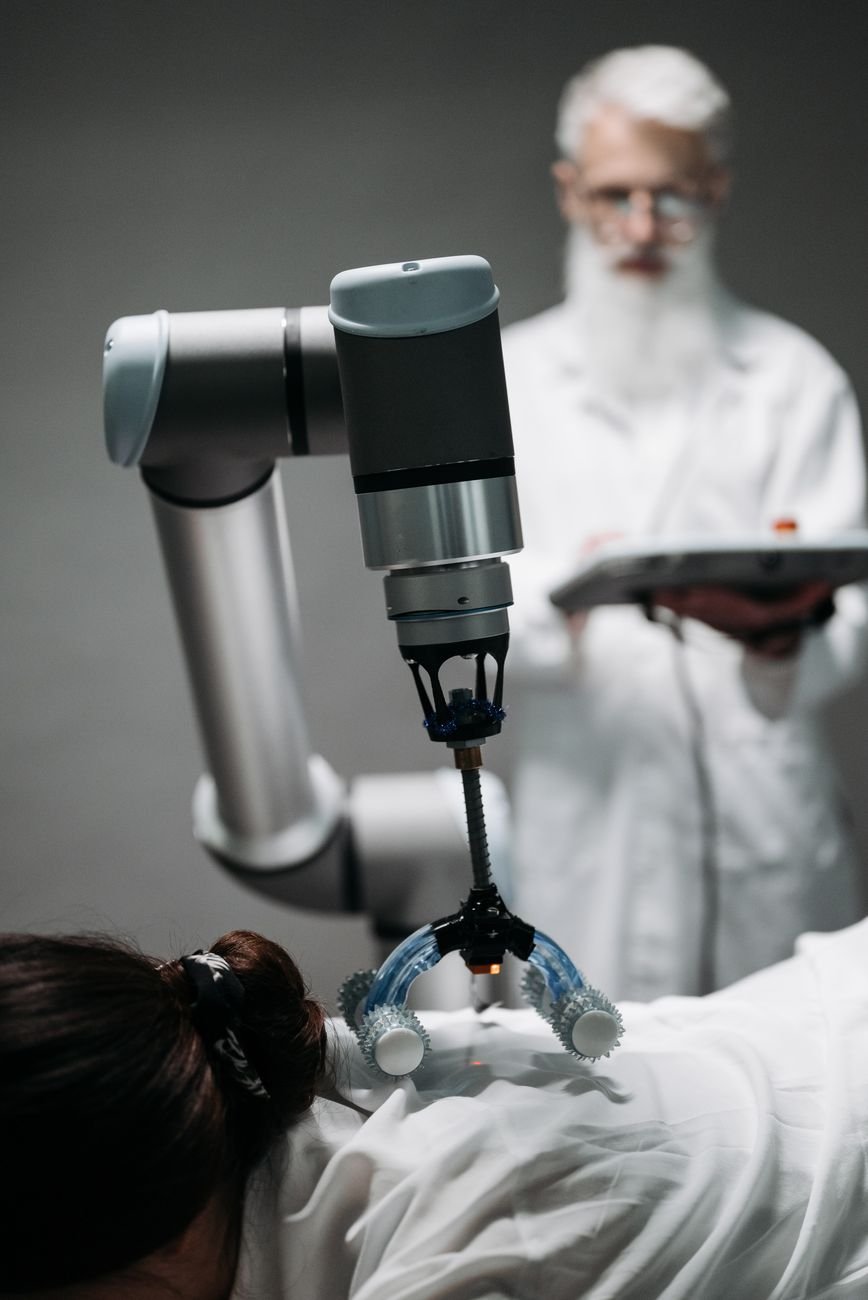
Seven years ago, a robot in an Indian operating theatre was a novelty that hospitals advertised on hoardings. Today, robotic procedures are routine at corporate hospitals in the metros, free of charge at AIIMS, and recently made it to Delhi’s Safdarjung Hospital under Ayushman Bharat. But the same boom has also raised questions on cost, necessity, training and who actually benefits.
How fast is it growing?
By most counts, very fast, though the numbers do not agree.
- Robotic procedures in India rose from 8,912 in 2021 to 44,857 in 2025, according to figures cited by Outlook India on October 6, 2026. Delhi-NCR alone went from 2,257 to 10,937 procedures, with robotic systems in 39 hospitals, 11 of which run more than one.
- Scroll.in, citing the Clinical Robotic Surgery Association, reported in May 2026 that fewer than 100 robotic machines were installed in India by 2020 and more than 500 by 2025. About 250 are Intuitive’s da Vinci systems and SS Innovations has sold 160, according to the same report.
- Outlook India quotes Dr Anup Kumar of Safdarjung Hospital as saying around 600 to 700 systems are installed.
- Other sources give lower figures. A Tribune report from January 2026 says “over 100” robots are operational, mostly in private hospitals, and Intuitive said in 2024 that more than 170 da Vinci systems were installed in the country.
- SS Innovations, which makes the indigenous SSi Mantra, reported in a January 2026 release a cumulative 168 installations by December 31, 2025, up from 65 a year earlier. It does not break these down by country.
The honest summary: the count depends on who is counting, what counts as a “robot” (orthopaedic robots are included in some tallies) and what year the figure refers to. All sources agree on direction: the growth is steep.
Who is offering it
Government hospitals. AIIMS New Delhi’s Department of Surgical Disciplines says it completed more than 1,000 robotic-assisted surgeries in 13 months, after installing a dedicated robot in November 2024, as The Tribune reported on January 21, 2026. The department’s claim, as reported, is that it is the first general surgery unit in a government hospital in India with a robot used exclusively by that unit. Procedures include pancreatic, gastric, oesophageal and colorectal cancer surgery, abdominal wall reconstruction, kidney transplantation and endocrine tumour resections.
Safdarjung Hospital, Delhi, performed its first robot-assisted total knee replacement on August 22, 2026, for a 75-year-old patient from an economically weaker section, free under Ayushman Bharat, according to ETV Bharat and Outlook India. Neither report names the make of the robot, and only this one case was reported. Dr Anup Kumar of Safdarjung’s urology and renal transplant team is also an organising chairman of the Society of Robotic Surgery’s India meeting, per Outlook India.
Private and corporate hospitals. Max Super Speciality Hospital, Vaishali, is named in Outlook India’s report through Dr Vivek Bindal. Fortis publishes its own robotic surgery programme pages and press releases on urological robotic surgery. Apollo has a robotic surgery information page and, per trade reports, has also demonstrated Medtronic’s Hugo system. KIMS signed an agreement with Intuitive in October 2024 for 25 da Vinci programmes in tier 2 and tier 3 cities of Maharashtra, Karnataka, Andhra Pradesh and Telangana.
The experts attempting it
- Prof. Sunil Chumber, head of AIIMS’s Department of Surgical Disciplines, told The Tribune: “All surgeries at AIIMS are performed free of cost,” and added, “The surgery is still performed entirely by the surgeon.”
- Dr Anup Kumar performed a urological tele-surgery from Gurugram on a patient in Hyderabad, more than 1,600 km away, Outlook India reports. He expects a “tsunami” of robots in coming years.
- Dr Vivek Bindal led a live India-China demonstration, operating a console about 5,000 km away in Chengdu.
- Dr Sudhir Srivastava, CEO of SS Innovations, is the force behind the SSi Mantra, which the company says has been clinically validated in more than 100 types of surgical procedures.
What it costs: public versus private
There is no published nationwide price list, so any comparison relies on individual disclosures.
| Government | Private | |
|---|---|---|
| Patient cost | Free at AIIMS (per Prof. Chumber); free under Ayushman Bharat at Safdarjung | Robotic assistance can add “nearly Rs 1 lakh” to a bill, excluding other charges (Prof. Chumber, The Tribune) |
| Hernia repair | Not reported | Robotic Rs 1.5-4 lakh, about Rs 1 lakh more than laparoscopic (Scroll) |
| Extra cost per patient | Not reported | Rs 1.25 lakh to Rs 10 lakh, depending on the procedure (Scroll) |
| Example | Not reported | A robotic bladder cancer surgery billed Rs 13.17 lakh (Scroll) |
Note that “free” in government hospitals means free at the point of care. Waiting lists and access limits apply: The Gyan Muse panel notes that in most hospitals, surgical robots are shared among several departments, limiting access.
Insurance is an additional problem. Scroll reports that IRDAI requires insurers to cover robotic surgery, but many cap cover at 50 per cent of the sum insured, and one insurer reimbursed Rs 3.5 lakh of a Rs 13.17 lakh bill.
Keeping the machines running
Servicing is where the economics sit. Scroll reports that a robotic system costs Rs 20 crore or more, with annual maintenance of about 5 per cent, roughly Rs 1 crore a year, and that Indian-made systems cost less.
Instruments are a recurring cost too. Intuitive’s standard instrument limit is 10 uses, with an Extended Use Program allowing 12 to 18 uses for some instruments, per MedTech Dive in 2020. India-specific instrument prices were not found in the sources reviewed.
Servicing contracts have also been contested abroad. In the US, hospitals filed class actions in 2021 alleging that Intuitive forced them into multi-year exclusive servicing agreements; Axios reported the allegations, and Intuitive declined to comment on the lawsuits. Those are allegations from a different market, and no comparable India-specific dispute turned up in the sources I reviewed.
Training is a gap. Scroll reports that robotic training is not part of MBBS or postgraduate curricula, there are no uniform guidelines and courses are not NMC-affiliated.
Do patients need it?
The evidence is mixed, and surgeons say so. Benefits cited include magnified 3D vision, smaller incisions than open surgery, and possibly less blood loss and faster recovery. But Scroll found several experts saying a robot offers no extra benefit in a simple hernia repair. One was quoted: “For a simple non-complicated hernia procedure, a laparoscopic surgery is preferable to robotic.” Another said hospitals must recover the cost of the machine, which “push[es] doctors to encourage robotics to patients.” Scroll also describes the May 2025 death of a 35-year-old patient after robotic hernia surgery; the family’s claim is under legal and regulatory review, and no causal link has been established.
In a survey of 609 doctors in North Maharashtra, 72.2 per cent named cost as the biggest barrier to wider adoption, per Outlook India.


No responses yet