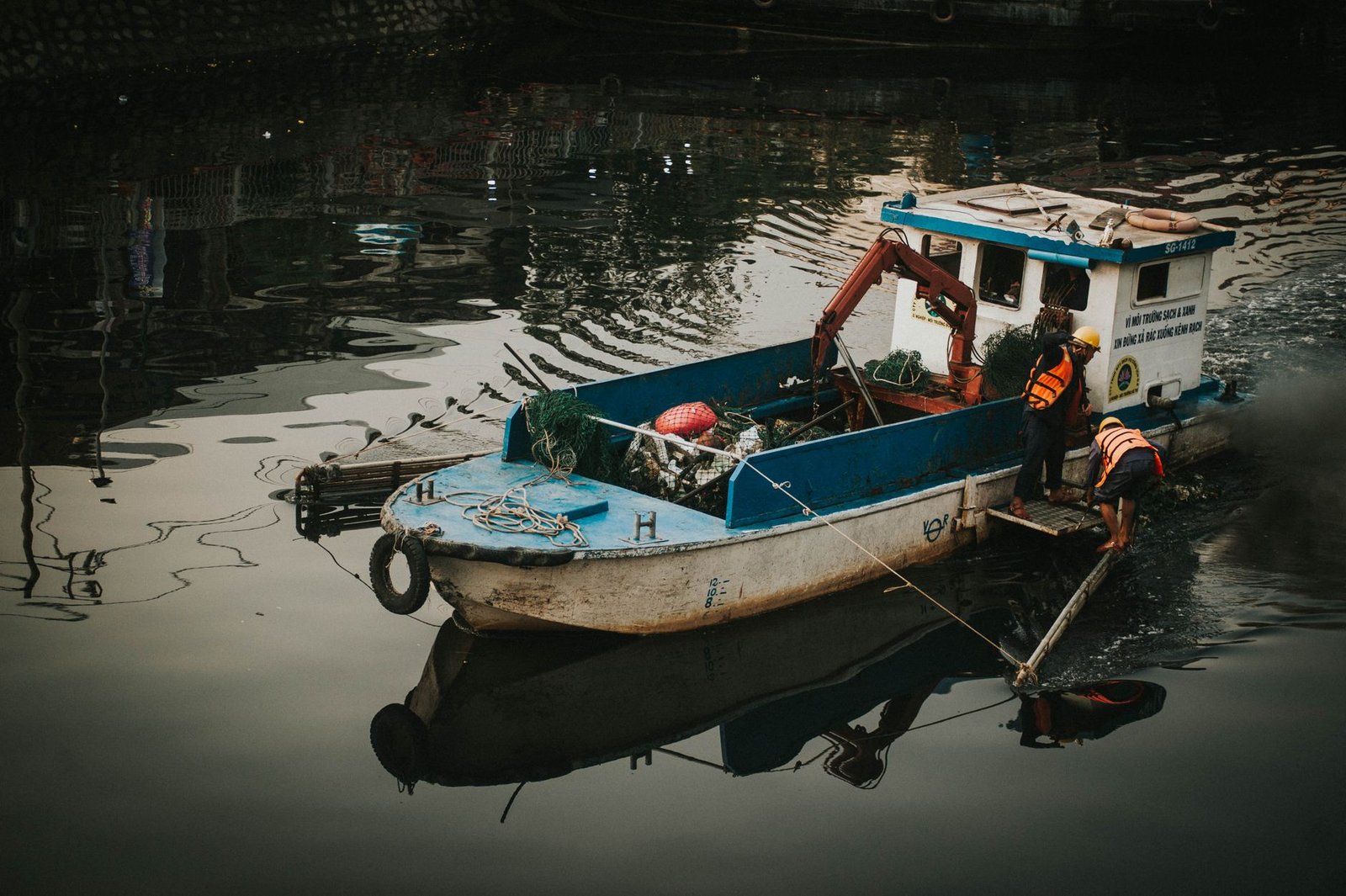
If your Instagram, Facebook, or YouTube feed has recently been filling up with videos of someone wading into a filthy, plastic-choked stream and slowly clearing it out until fresh water starts flowing again, you’re not imagining a trend — you’re watching one of the more meaningful uses of viral content in India today.
Why This Matters
India’s rivers, lakes, and ponds are in genuine crisis. Government pollution board assessments have repeatedly flagged hundreds of river stretches across the country as critically polluted, choked with untreated sewage, industrial effluent, and plastic waste. Urban lakes have vanished under encroachment and garbage; village ponds that once recharged groundwater have turned into dumping grounds. This isn’t just an aesthetic problem — it threatens drinking water security, groundwater recharge, agriculture, fisheries, and the health of everyone downstream.
Government-led programs like Namami Ganga exist, but they move slowly and unevenly, and enforcement against industrial and municipal polluters is often weak. That’s precisely the gap that individual creators and grassroots collectives have stepped into — and it’s why their social media presence matters far beyond “likes.” A viral video of one person clearing a stretch of river does three things at once: it removes real, physical waste; it shames civic apathy (both public and administrative) into action; and it normalizes the idea that ordinary citizens, not just governments, are responsible for water bodies. Several of the examples below have directly triggered local administrative response, corporate donations, or copy-cat cleanups elsewhere — proof that this kind of content can move from a screen to on-the-ground impact.
With that context, here is a list of remarkable individuals and their initiatives, along with their actual social media accounts as of the time of writing.
(Important Note: I’ve stuck strictly to names and handles I could confirm are genuine — please double-check handles yourself before engaging, since accounts and follower counts change.)
Notable River and Water Body Conservation Efforts
1. Bittu Tabahi — Solo cleanup of the Ajnar River, Madhya Pradesh
A 20-year-old from Biaora, Madhya Pradesh, Bittu began clearing the heavily polluted, plastic- and algae-choked Ajnar River in early 2026, initially with a couple of friends who eventually dropped out. He kept going alone, often waist-deep in the water, using little more than his hands and basic tools, and documented the entire transformation on Instagram. His videos went viral nationally and drew public praise from businessman Anand Mahindra, who called him his “Monday Motivation” and pushed back at critics who dismissed the effort as attention-seeking.
- Instagram: @bittu_tabahi
2. Sant Balbir Singh Seechewal (“Eco-Baba”) — Kali Bein River revival, Punjab
Not a typical “influencer” by trade — he’s a Sikh religious leader turned Rajya Sabha MP — but his decades-long, largely self-funded restoration of the 160-km Kali Bein river (a rivulet sacred to Sikhs, near Sultanpur Lodhi) is one of India’s most cited river-revival stories, and it’s now extensively documented across social platforms. Starting in 2000 with no government support, he mobilized thousands of local volunteers over the years to desilt, decontaminate, and rebuild the ghats along the river, turning what had become an open drain back into a living waterway. He was awarded the Padma Shri in 2008 for this work.
- Instagram: @sant_balbir_singh_seechewal
- (Note: a second, older-format account, @santseechewal63, also exists and appears linked to him — worth checking both before following.)
3. G. Nagaraj (“Plogman of India”) and The Indian Ploggers Army — Bengaluru lake cleanups
Nagaraj founded The Indian Ploggers Army in 2018, combining running with waste collection (“plogging,” a trend that originated in Sweden). The group now organizes weekly citizen-led cleanups of Bengaluru’s lakes — Madiwala Lake being one recent example — often in partnership with the city’s civic body (BBMP) and local colleges. Nagaraj has twice been recognized as a “Swachhata Hero” under India’s national Swachh Survekshan cleanliness survey, and the model has since been replicated by volunteers in 35+ Indian cities.
- Instagram: @ploggersarmytrust
4. Akash Yadav — “Cleanup Patwai” Ganga ghat revival, Rampur, Uttar Pradesh
A 23-year-old from Patwai village who, alongside friend Rohan Dev, started picking up trash around neglected Ganga ghats after nobody else would. What began as two people with garbage bags has grown into a 15-member youth-led initiative called Cleanup Patwai, which has since revived four Ganga ghats, removed over a tonne of plastic waste, restored village ponds, and planted around 1,000 trees in the Rampur area. Their story has been documented on video by The Better India.
- I was not able to independently confirm an official personal social handle for Akash Yadav or “Cleanup Patwai” with confidence, so rather than guess, I’d recommend searching “Cleanup Patwai” directly on Instagram/YouTube to find and verify the current account yourself.
5. Dr. Rajendra Singh — “Waterman of India,” river and water body revival, Rajasthan
A different scale of impact, but deeply relevant: through his NGO Tarun Bharat Sangh (founded 1985), Rajendra Singh has used traditional rainwater-harvesting structures called johads to revive five dried-up rivers in Rajasthan — including the Arvari — and restore water security to over a thousand villages. He won the Ramon Magsaysay Award (2001) and the Stockholm Water Prize (2015, often called the “Nobel Prize for water”), and remains active on social media discussing river rejuvenation and groundwater conservation.
- Instagram: @watermanofindia
- X (Twitter): @watermanofindia
- Facebook: Waterman of India
A Note on Verifying These Accounts Yourself
Handles, follower counts, and account activity change constantly, and impersonation accounts do exist for viral figures — Bittu Tabahi’s case in particular drew a lot of copycat and clout-chasing attention once it went viral. Before donating money, sharing personal details, or engaging deeply with any of these accounts, cross-check the handle against multiple independent news sources (as I’ve tried to do above) rather than trusting a single link.
Beyond Individual Creators
It’s also worth knowing that this individual-led wave sits alongside larger institutional efforts — the UN-backed River Cities Alliance working with India’s Namami Ganga Mission, the Bharat Clean Rivers Foundation in Mumbai (partnered with The Ocean Cleanup to intercept plastic before it reaches the sea), and NGOs like Earth5R running structured, data-tracked river and lake cleanup programs across multiple cities. Individual creators often generate the public pressure and visibility; these larger organizations often provide the sustained, technical follow-through. The two are increasingly working together rather than in isolation.


No responses yet