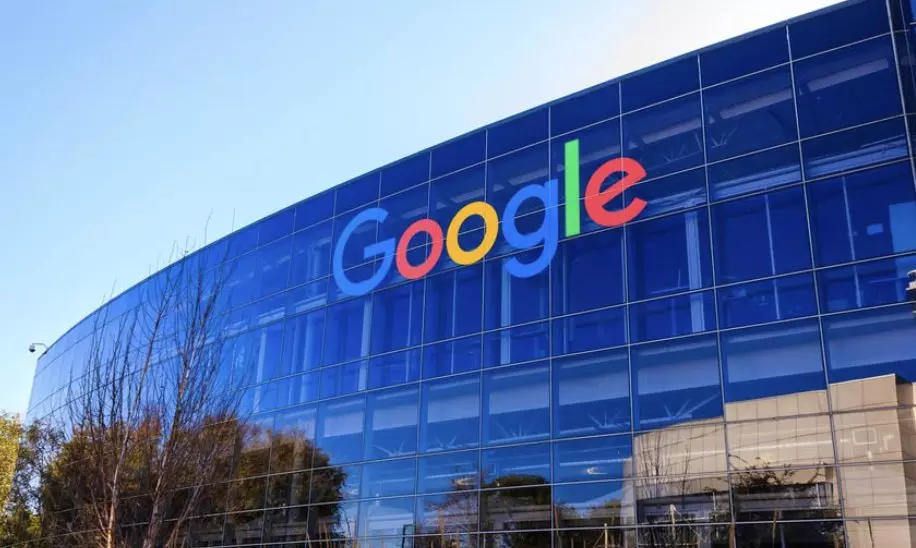
Campaign posters in Visakhapatnam show Google’s logo in handcuffs, and another warns that people “cannot drink data.” The images capture a growing backlash against the company’s $15 billion AI data centre hub in the Andhra Pradesh port city, the biggest foreign tech investment the state has attracted and, by AFP’s account, Google’s largest data centre outside the United States.
The project
Google announced the hub on October 14, 2025, in a blog post by Google Cloud CEO Thomas Kurian. It described the investment as “our largest investment in India to date,” about $15 billion over 2026-2030, covering a gigawatt-scale data centre campus, new energy sources and an expanded fibre network, with AdaniConneX and Airtel as partners. The plan also includes an international subsea cable gateway in Visakhapatnam, a city where cables linking India and Singapore already land.
Chief Minister N. Chandrababu Naidu laid the foundation stone on April 28, calling it “a historic day for Andhra Pradesh and India” and a “growth engine for India,” according to a report carried by TBS News. The facility covers 600 acres, and Google expects it to be operational in 2028. Another venture, a joint venture of Reliance Industries, Brookfield and Digital Realty, is investing $11 billion in a separate AI data centre in the city.
What residents and activists say
Land. Farmer Chandala Sadamma, 50, was paid more than $82,000 for two acres of mango and cashew land. “Some company came and, without showing any respect, they took the land and we accepted it,” she told AFP, adding that she feels like crying when she sees the scarred land. The Guardian, in reporting summarised by TNW, found that about 520 families in Tarluvada had land taken back that the government had given them around 20 years ago, and that 47 Dalit farmers were paid but say they have not received the promised new plots and jobs. Farmer P Venkat Rao said he received $40,000 for his only acre and now has no livelihood: “I am a farmer, without my land I am nothing.” The state says no land was taken by force and that those who qualified were paid well, and the Adani Group says all legal approvals are in place. Other reports, including Frontline, say the Dalit community is divided on the acquisition.
Water. Shopkeeper Gubbala Ramanamma, 57, who spoke beside a dry well, said the area already struggles with water scarcity. E.A.S. Sarma, an environmental campaigner and former senior official in the power and finance ministries, has called for an independent water audit. “Civilisations have vanished because of water shortages,” he warned.
Jobs and priorities. Gutta Rohith of the Human Rights Forum, speaking to a meeting of about 150 people, said: “We need mass employment and labour-intensive industries, not high-capital industries.” Activists want a moratorium on new data centres across Andhra Pradesh until independent environmental and social impact assessments are published.
What Google and the government say
Google says the site will use “advanced” air cooling, not water-intensive cooling. It projects $688 million in local economic activity a year, about 4,200 construction jobs and hundreds of specialist jobs once the site is operating in 2028. “The watershed, the grid and the communities around our facilities must be better off for our being here,” said Alexander Smith, Google’s head of infrastructure and energy for Asia-Pacific.
The Andhra Pradesh government says it provides compensation and new housing for people who lived on the site, and expects “188,000 direct and indirect jobs.” Technology Minister Nara Lokesh told AFP: “The water needs of our people will always come first,” and said residential needs would be prioritised over data centres. The state plans six 1.2-gigawatt nuclear power plants as demand grows.
The legal and regulatory questions
The Guardian reported that the project has state environmental clearance for 2.51 GW, more than double the 1 GW announced, a figure it equates to over 30 per cent of the state’s current yearly power use. It also reported that approval took nine days with no public hearing and that the Human Rights Forum has filed three petitions at the National Green Tribunal, none yet decided. Google told the Guardian that the hub is gigawatt-scale and comparable to other projects. The Guardian estimates the state’s tax breaks, cheap land, power and water for Google at 220 billion rupees ($2.2 billion) over 20 years.
In the Andhra Pradesh High Court, activist Bolisetty Satyanarayana has challenged the clearance in a public interest petition, as LiveLaw reported on September 14. He alleges the project received a Category B2 clearance without public consultation, that it sits 0.86 km from Kambalakonda Wildlife Sanctuary and about 120 metres from the Mudasarlova drinking-water reservoir, and that 160 acres of temple land were transferred without the required procedure. The State Level Environment Impact Assessment Authority defended the clearance, saying data centres are not specifically listed in the 2006 EIA notification, that the site is outside designated forest land and that an “850 km” distance in the minutes was a typographical error. The case was listed for hearing on October 5; the sources reviewed here do not report the outcome.
The wider picture
The fight echoes data-centre opposition elsewhere. AFP reports that a Finnish authority ordered work halted at two Google data-centre sites pending mandatory environmental assessments. India generates nearly a fifth of the world’s digital data but has only about 3 per cent of global data-centre capacity, according to government figures cited by AFP, which is the case governments make for building fast. Land prices around Visakhapatnam have risen by an average of more than 45 per cent since the city unveiled its development plans, according to E. Ashok Kumar, head of CREDAI Visakhapatnam.
What to watch
The High Court and National Green Tribunal rulings; whether independent assessments of water and power demand are published; and how Google’s air-cooling promise squares with a clearance of 2.51 GW. The reports reviewed give no figures for the facility’s water or electricity use.


No responses yet