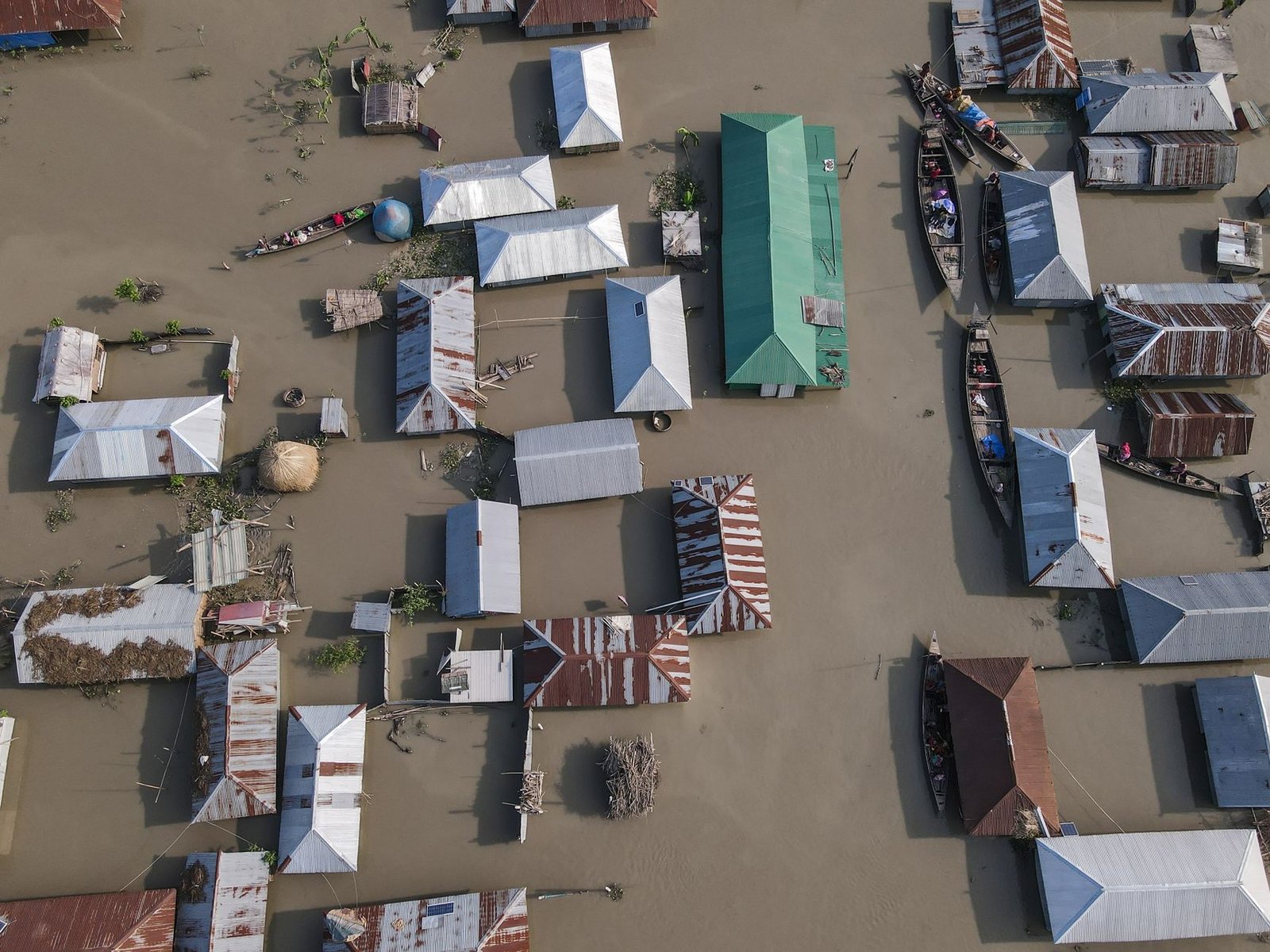
Nepal’s mountains have delivered another flood. A landslide blocked the Budhi Gandaki River in Gorkha district on Sunday, and when the temporary barrier gave way, a flash flood tore through the valley, sweeping away homes, bridges and other buildings, according to Euronews and BBC footage. It is the latest in a series of water-and-ice disasters in central Nepal since late August, and it has revived the question that has hung over every one of them: how much of this is climate change?
What happened
The landslide that started the chain occurred near Chumchure, in Gorkha district, Euronews reports. Nepal News, citing figures as of 3 PM on Sunday, says the flood hit the Chumnubri area and also affected Dharche and Arughat rural municipality. At least five people were missing, two women and three men who had been staying at a sheepfold in Chumchet, and 49 people had been rescued. Several suspension bridges were destroyed in Chumnubri, Dharche and Arughat. The Nyakchet-Philim bridge near the Gorkha-Dhading border was swept away, telephone towers and electricity poles were damaged, and equipment from the 341-megawatt Budhi Gandaki hydropower project was reported swept away.
Authorities ordered residents along the river to evacuate, and people attending funeral rites were told to move to higher ground. The National Disaster Risk Reduction and Management Authority (NDRRMA) told communities to stay alert until late Sunday, and warnings extended downstream along the Trishuli and Narayani rivers. The Nepal Army deployed four helicopters and 437 security personnel. No deaths had been reported at the time of the Euronews report, and the missing count could change. Neither report gave a rainfall figure for this event.
The pattern: five events in seven weeks
This is not an isolated event, and the mechanisms differ, which matters for how it is read.
- August 26: A section of glacier and rock on Langtang Lirung collapsed and sent a flood down the Trishuli towards the Nepal-Tibet border. Early counts were uncertain; Inside Climate News later put the death toll at at least 1,300, with about 5,000 still missing, and Euronews reports more than 1,400 dead, about 33,000 people affected and reconstruction costs estimated by the government at $4.77 billion.
- September 6: The Therang River flooded in Chumanubri, Gorkha, and swept away four houses and a suspension bridge, which Republic World said was expected to disrupt trekkers in the Manaslu region. No casualties were reported.
- September 24-27: A low-pressure system over the Bay of Bengal brought heavy rain. NDRRMA recorded 542 incidents, with 27 deaths in those four days, and more than 100 mm of rain at 186 stations, with a peak of 544.2 mm at Dedhgaun.
- September 27: An avalanche hit Himlung Himal base camp in Manang. The toll had reached 11 by October 1, with five workers still unaccounted for, The Watchers reported.
- October 11: The Budhi Gandaki landslide flood.
The changing climate
Scientists are careful here, and so should be readers. For the August glacier collapse, a World Weather Attribution study published in September concluded that decades of global warming set the stage. Walter Immerzeel, a mountain hydrologist at Utrecht University, said warming is pushing the freezing line up roughly 100 metres per decade, and that permafrost degradation, glacier retreat and record summer heat mean “the structural integrity of these mountain walls is compromised.” Fredi Otto of Imperial College London said permafrost thaw, glacier thinning and more rain instead of snow “preconditioned” the mountain for collapse. The researchers also noted that more detailed glacier modelling could quantify the human contribution more precisely.
For the October 11 flood, no such attribution exists, and the reported trigger is a landslide that dammed a river, a hazard that heavy rain and weakened slopes make more likely but that has many possible causes. Nepal’s wider context is clear: Al Jazeera reported that glaciers across the Hindu Kush Himalaya lost ice 65 per cent faster in 2011-2020 than in the previous decade, and that Nepal’s glaciers have lost close to one-third of their volume in roughly three decades.


No responses yet