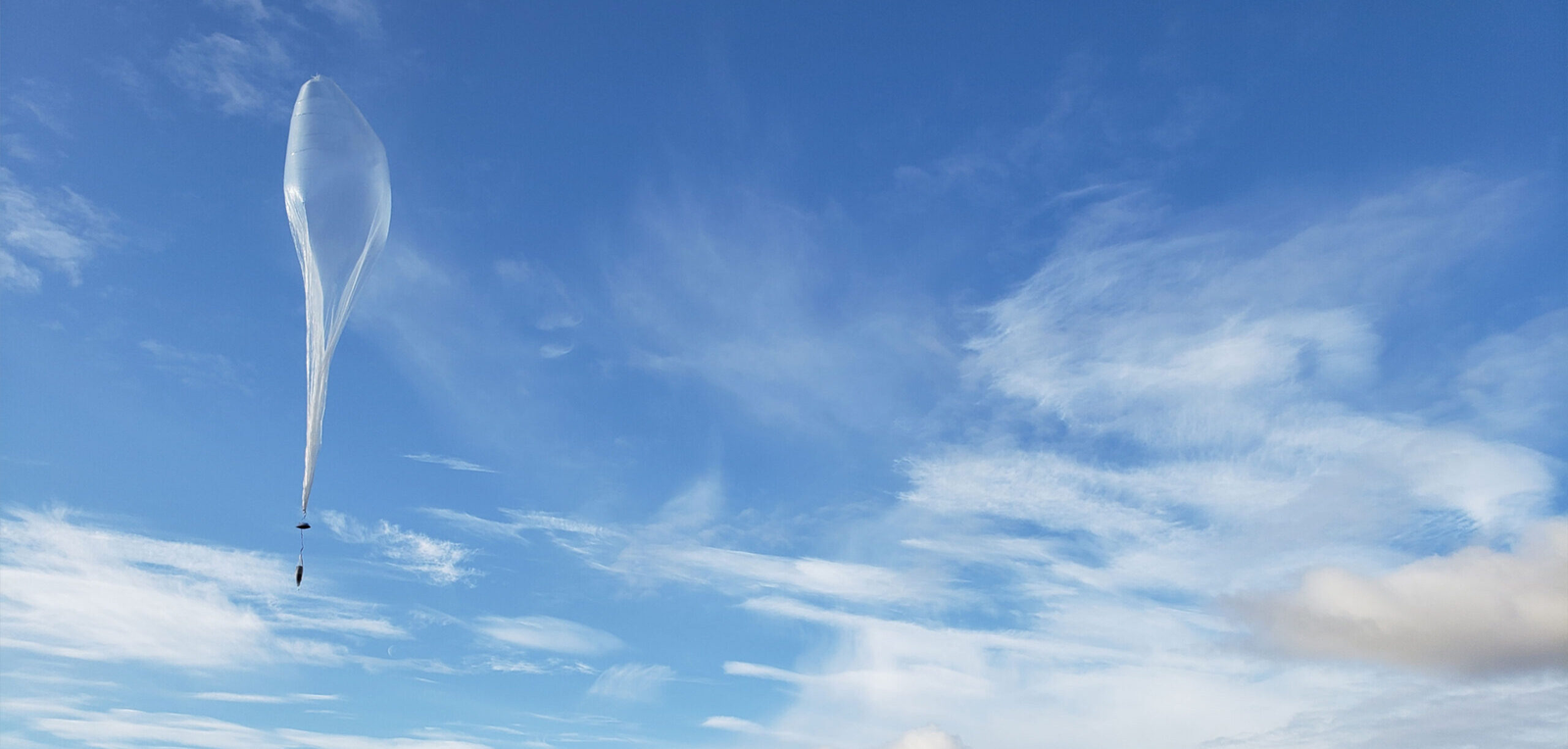
The US Air Force will buy data from WindBorne Systems’ fleet of autonomous weather balloons under a contract worth up to $49 million, the largest government deal yet for the California startup, as reported by various media outlets.

How the deal works
The contract is pay-as-needed: the Air Force orders data for specific regions at specific times. The $49 million figure is a ceiling, not a commitment. So far the service has ordered $1.7 million of data, and WindBorne executives expect more orders to follow, according to TechCrunch. The award was made without competitive bidding.
WindBorne co-founder and chief technology officer Andrey Sushko described the no-bid decision as “a determination by the government that for this capability of collecting global data, we were the only company.” That is the company’s characterization of the government’s reasoning; the Air Force’s own justification was not part of the report reviewed here.
The company says the contract will help support the growth of its balloon network. “This is largely a vehicle through which continued growth of the constellation can be supported,” Sushko said. The Air Force will also use the data for hardware and performance research and development, per the company.
What WindBorne does
Founded in 2015 and based in Redwood City, California, WindBorne operates about 700 weather balloons worldwide. The balloons are steered by adjusting altitude, releasing air or dropping sand ballast, and carry sensors that collect atmospheric data. WindBorne sells that data to customers and also feeds it into its own AI weather model, WeatherMesh 6. The company is among the first organizations to feed empirical data directly into a deep-learning weather model, and that it has worked with the National Weather Service, the Air Force and the Navy.
In August, the company became the first organization to send an unpowered flight system into the eye of a typhoon, TechCrunch reports. “It’s one of the first times that a deep-learning model was used for actual operational decisions,” Sushko said of that mission.
The money behind it
WindBorne raised a $37 million Series B in August, according to CEO John Dean. The round was co-led by Khosla Ventures and Galvanize at a $250 million post-money valuation, with Translink Capital and Lux Capital also taking part. That valuation was not in the October article.
What to keep in mind
WeatherMesh 6’s accuracy claims come from WindBorne’s own benchmarks, compared against the European Centre for Medium-Range Weather Forecasts’ model, and TechCrunch notes that AI forecasting is still a “jagged frontier” in which traditional and AI forecasts are both needed. The contract’s value will depend on how much the Air Force orders. The reports reviewed here do not say which regions or time periods it will request, or how long the contract runs.


No responses yet