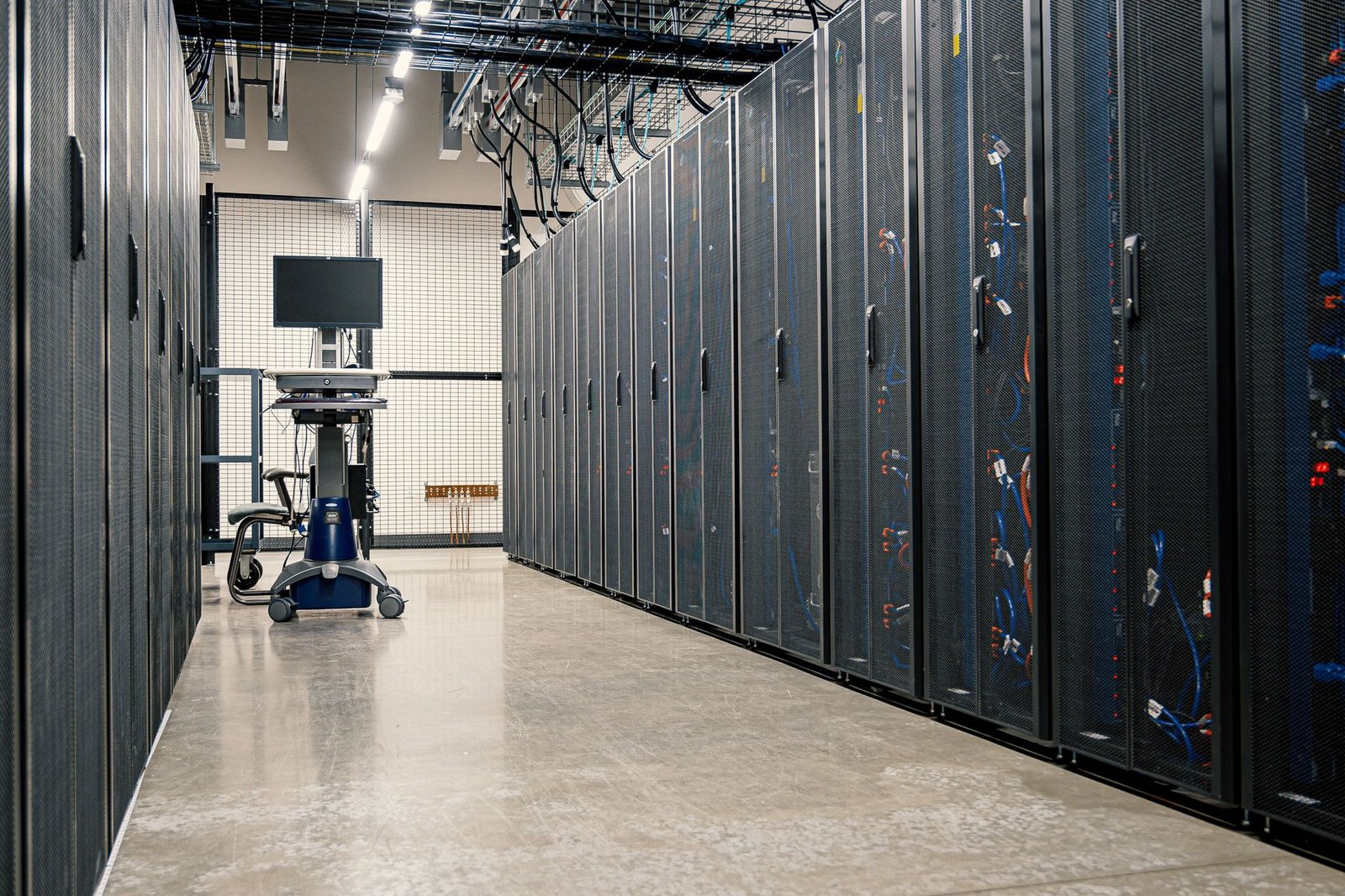
As global tech giants race to build AI infrastructure across India, the government is trying to set the terms of that race before it runs unchecked: grow the data centre sector aggressively, but not at the cost of local water resources and environmental safeguards. That was the core message from Union Minister of State for Commerce and Industry, and Electronics and IT, Jitin Prasada, speaking at the Microsoft AI Infrastructure Summit India.
The core ask: build near power, not near water
Prasada’s central point was practical rather than abstract. He said the government wants the fast-growing data centre sector to adopt green power, closed-loop water systems and resource-efficient cooling technologies as standard practice, not an afterthought bolted on after facilities are already running. More specifically, he urged developers to think about site selection differently — locating new facilities closer to reliable power sources rather than water sources, an explicit acknowledgment that conventional data centre cooling remains deeply water-intensive, and that as capacity scales up nationally, water availability could become the harder constraint of the two.
He framed this as compatible with, not opposed to, India’s ambitions: the country’s digital and AI goals genuinely require substantial data infrastructure, but that expansion has to be aligned with sustainability objectives from the outset rather than retrofitted later. India has the land, the talent pool and the digital infrastructure to pull in large-scale investment, he said, while the government continues working to improve the broader enabling environment for that growth.
The announcement behind the moment: Microsoft’s fourth Indian cloud region
Prasada’s remarks came at the launch of Microsoft’s newest cloud infrastructure investment in India — its fourth cloud region in the country, called India South Central, based in Hyderabad and joining existing regions in Pune, Chennai and Mumbai. Puneet Chandok, President of Microsoft India and South Asia, said the new Hyderabad region is designed to use effectively zero water for cooling and is being built from day one to handle AI workloads, adding that the company is actively “putting water back into the ground” — a reference to water-positive design commitments rather than the conventional evaporative-cooling approach that has drawn criticism at data centres elsewhere in India and globally.
Chandok also described Hyderabad’s new region as a strategic hub for Asia and the Global South, positioning India not just as a market for cloud capacity but as a regional base for serving other countries in the area.
Separately, Prasada emphasized that keeping citizens’ data within India — data localisation — is a key reason government wants both public and private sectors collaborating closely: investment, employment generation and data security all being treated as linked outcomes of the same infrastructure push, in his framing.
The bigger numbers behind the push
This isn’t a small or speculative buildout. Prasada told the Rajya Sabha in December that India’s cloud data centre capacity has already reached approximately 1,280 MW, serving critical sectors including banking and power infrastructure, and is projected to grow four to five times by 2030. He pointed to marquee global investments already committed — Google’s USD 15 billion AI hub in Visakhapatnam, its largest investment in India to date, and Amazon Web Services’ USD 8.3 billion data centre under construction in Maharashtra — as evidence that global capital is already betting heavily on India’s AI and cloud infrastructure growth.
The regulatory scaffolding already in place
The sustainability push isn’t purely rhetorical — India has been building out a technical and regulatory framework for it over the past year. The Bureau of Indian Standards, through its technical committee on Cloud Computing, IT and Data Centres, has published a series of Indian Standards covering Power Usage Effectiveness, Carbon Usage Effectiveness, Cooling Efficiency Ratio and Water Usage Effectiveness specifically for data centres. The Bureau of Energy Efficiency has separately notified building codes — the Energy Conservation Building Code 2017 and the newer Energy Conservation & Sustainable Building Code 2024 — that set energy efficiency and water conservation norms applicable to data centre facilities.
On groundwater specifically, Prasada noted that regulation and control of extraction for industrial purposes, including by data centres, falls under guidelines issued by the Ministry of Jal Shakti — meaning water use isn’t governed by IT ministry policy alone but sits within India’s broader water-resource regulatory apparatus. He also pointed to the industry’s own technological shift as part of the solution: data centre operators are increasingly adopting direct-to-chip liquid cooling and adiabatic cooling systems, technologies that meaningfully cut water requirements compared to older evaporative cooling towers, as AI-driven compute demand pushes cooling loads higher across the board.
Why this balancing act matters
Data centres sit at an uncomfortable intersection for a country like India: they’re essential infrastructure for the AI-driven digital economy the government is actively courting investment for, but they’re also resource-hungry facilities that concentrate demand for both power and water in specific locations — often the same urban and semi-urban clusters (Mumbai, Navi Mumbai, Chennai, Hyderabad, Bengaluru, Delhi NCR, Jamnagar) already facing their own infrastructure and water-stress pressures. Prasada’s comments suggest the government’s strategy is to front-load sustainability requirements — standards, siting guidance, cooling-technology expectations — while the sector is still in its high-growth phase, rather than waiting to address environmental costs after billions of dollars in facilities are already built and operating on older, thirstier cooling designs.
Whether commitments like Microsoft’s “effectively zero water” Hyderabad facility become the norm across the industry, or remain a marketing differentiator for a handful of the largest global players, will likely determine how much of Prasada’s stated goal — data centre growth without compromising India’s water and environmental resources — actually holds as the sector scales toward that projected 4-5x capacity growth by 2030.


No responses yet