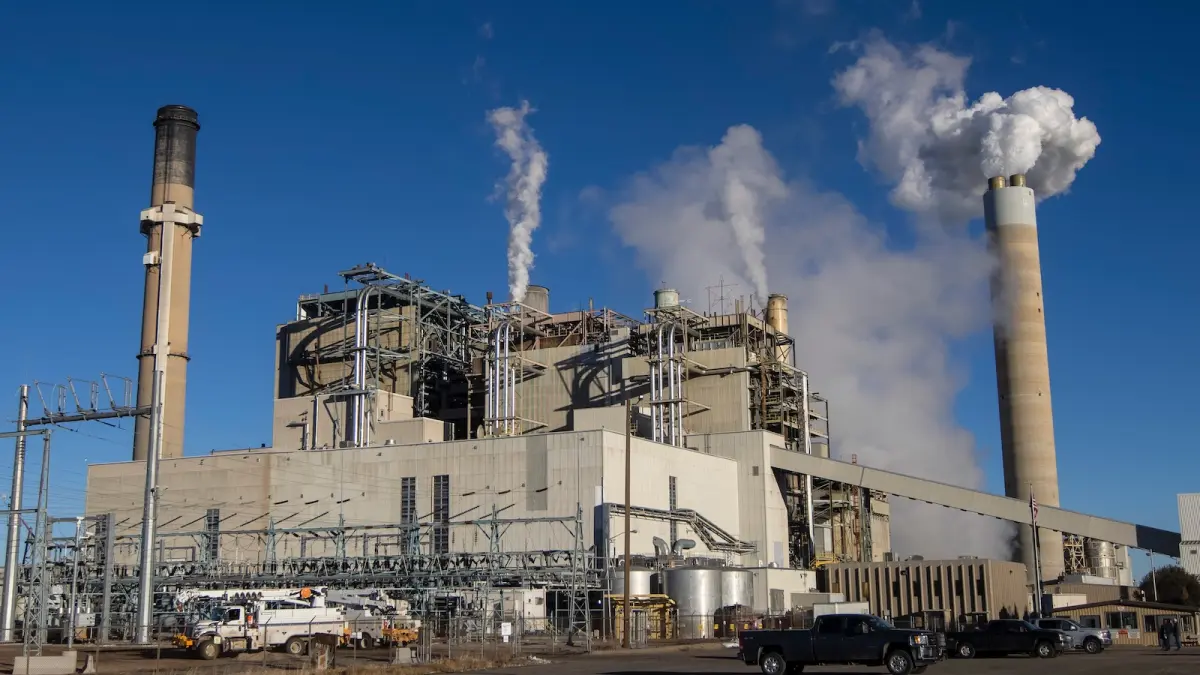
EPA Administrator Lee Zeldin recently signed a final rule repealing the carbon pollution standards that had governed America’s coal and gas-fired power plants. This is a move his own agency has called the largest deregulatory action taken on the US power sector in its history. The announcement came on the sidelines of a G20 energy ministers’ meeting in Houston, and it caps a broader campaign this year to unwind nearly every major federal climate rule tied to power generation and vehicles.
What exactly changed
The repeal eliminates the 2024 Biden-era rule that required existing coal-fired plants and new natural gas-fired plants to significantly cut their carbon dioxide emissions starting in the 2030s — largely by forcing coal plants to install carbon capture equipment and imposing tighter standards on newly built gas plants. Alongside the formal repeal, the EPA also proposed rescinding the underlying “endangerment finding” framework the agency has used since 2009 to justify regulating greenhouse gases as a public health threat under the Clean Air Act — a foundational finding that, if it falls, could make it far harder to reinstate similar climate rules in the future, regardless of which administration is in office.
This isn’t an isolated action. Earlier in 2026, the EPA had already rescinded comparable climate standards covering vehicle emissions. Power-plant carbon rules have now had one of the more turbulent regulatory histories of any US environmental policy: the Obama administration’s 2015 Clean Power Plan was struck down by the Supreme Court in 2022; the first Trump administration’s replacement rule was separately struck down in court; the Biden administration then finalized a new, more stringent rule in 2024 — and that is the rule now being repealed, less than two years after it took effect.
The administration’s case
EPA Administrator Lee Zeldin has argued the 2024 rule “suffocated” the economy and that greenhouse gas emissions from US power plants represent a small and shrinking share of global emissions, making strict domestic controls not worth their economic cost. The agency projects the repeal will save industry more than $300 billion and has framed the move as central to an “energy dominance” agenda focused on affordability and grid reliability. Industry reaction has largely echoed that framing — America’s Power, the trade group representing the country’s coal-fired fleet, said overturning the rules would help preserve the coal fleet and protect consumers from rising electricity costs “at a time of surging demand from data centers, artificial intelligence, and advanced manufacturing.”
That last point is worth sitting with: the repeal arrives precisely as AI-driven data center construction is pushing US electricity demand up faster than it has risen in decades, and utilities across the country are already leaning on gas — and in some cases delaying coal plant retirements — to meet that load growth.
The environmental stakes
Power plants are the largest single industrial source of greenhouse gas emissions in the United States, responsible for roughly a quarter of the country’s total emissions — second only to transportation. An analysis by New York University School of Law’s Institute for Policy Integrity found that if the US power sector were counted as its own country, it would rank as the world’s sixth-largest greenhouse gas emitter on its own. Removing binding limits on that sector doesn’t just affect US domestic policy; given that the United States is the world’s second-largest overall emitter of climate pollution behind China, a rollback of this scale has consequences for the global carbon budget, not merely the American one.
Environmental and legal experts have been blunt about the timing. Michael Gerrard, a Columbia University law professor and director of the Sabin Center for Climate Change Law, noted that the decision comes precisely when the world needs to be curbing greenhouse gas emissions, not permitting more of them — pointing out that 2026 is on pace to be the warmest year on record. Shaun Goho, legal director at the Clean Air Task Force, called the broader rollback package “regressive” and warned it would prop up some of the country’s highest-polluting power plants. Former EPA Administrator Gina McCarthy, who oversaw the Obama-era Clean Power Plan, described the move as a political decision that overrides decades of scientific and policy review.
Beyond carbon dioxide, the repeal package also touches mercury and other hazardous air pollutant standards tied to coal-fired generation — pollutants with direct, well-documented links to respiratory illness, neurological harm and premature death in communities near power plants, independent of their climate impact.
A counterpoint the repeal doesn’t erase
Somewhat awkwardly for the “energy dominance” framing, the underlying economics of power generation have already been shifting away from fossil fuels regardless of regulation. Financial services firm Lazard’s own cost analyses show large-scale solar and wind projects are now more cost-competitive than new natural gas or coal generation in much of the country. That means the repeal may extend the operating life of existing, already-built coal and gas plants more than it changes what gets built new — utilities deciding on fresh capacity are increasingly choosing renewables on cost grounds alone, independent of climate policy.
What comes next
The repeal is very unlikely to be the final word. Environmental groups have already filed legal challenges against the related repeal of the 2009 endangerment finding, and similar litigation targeting the power-plant rule repeal is widely expected, given the rule’s history of being challenged and overturned by courts under multiple administrations. That means the practical, on-the-ground effect of this repeal — how much additional carbon dioxide and other pollution US power plants are actually allowed to emit over the coming years — will likely be determined as much by ongoing court battles as by the text of the rule Zeldin signed in Houston.
For now, though, the immediate environmental implication is straightforward: the primary federal check on carbon emissions from the largest single industrial source of US greenhouse gases has been removed, at a moment when global temperatures are already setting records and electricity demand from AI infrastructure is climbing sharply enough that utilities have strong commercial incentive to keep fossil fuel plants running longer, not less.


No responses yet