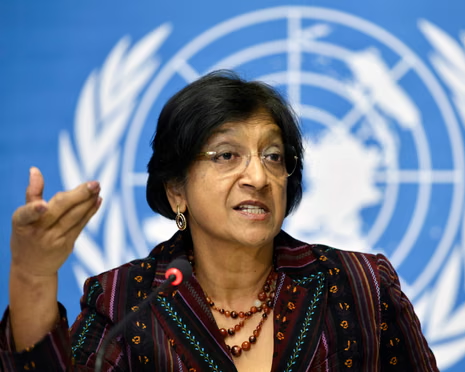
Donald Trump wanted it, said he deserved it and even admitted the Norwegians might not oblige. On Friday, they did not. For the second year running, the Nobel Peace Prize went to someone else, and this time to a woman whose life’s work is the kind of law Trump’s critics say his foreign policy treats as optional.
The Norwegian Nobel Committee awarded the 2026 prize to Navanethem “Navi” Pillay, the 85-year-old South African jurist, for her work to promote peace and international law. “She has shown that legal measures can help prevent acts of war and violence,” said committee chair Jørgen Watne Frydnes.
The woman who got the prize
Pillay was born in Durban and began her career as a defence attorney for anti-apartheid activists, including Nelson Mandela, and helped establish rights for prisoners on Robben Island. She went on to serve on the International Criminal Tribunal for Rwanda, as a judge of the International Criminal Court from 2003 to 2008, and as UN High Commissioner for Human Rights from 2008 to 2014. Al Jazeera reports that she now sits on the International Court of Justice, which is hearing a genocide case against Myanmar. In 2025, as chair of a UN-backed commission of inquiry, she accused Israel of genocide in Gaza, according to Euronews.
The committee said she was “instrumental in ensuring that war crimes, crimes against humanity, and genocide are prosecuted.” Its citation added that “international law is no longer just a supplement to peace and security. It is an absolute necessity.” Frydnes said the international legal system is “under tremendous pressure” and its institutions are “under attack,” and that judges “guard the thin red line between order and chaos.” The committee noted “more wars and conflicts than the world has seen in a long time.” It received 287 nominations this year.
The campaign that fell short
Trump had made no secret of his hopes. On Wednesday he told reporters in the Oval Office, “They have a reputation for maybe not giving it to people like me,” and added, “It is about that time,” according to Reuters. He argues he deserves the prize for “wading into eight conflicts” since January 2025. Reuters notes that parties to some of those conflicts dispute his diplomatic role, that fighting has flared again in the Democratic Republic of Congo and along the Cambodia-Thailand border, and that he has yet to broker peace in Ukraine, despite promising to end the war on his first day back in office. It also notes that US-Israel strikes on Iran led to a seven-month simmering conflict that disrupted global energy supplies.
Last year the White House answered the Nobel snub with a social media post by Communications Director Steven Cheung: “The Nobel Committee proved they place politics over peace.”
A more dangerous world
The numbers help explain why the committee used the language it did. The Institute for Economics and Peace’s 2026 Global Peace Index finds global peacefulness at its lowest level since the index began in 2008. It reports that 99 countries became less peaceful over the past year, the most since 2008. The index adds that conflict-related deaths exceeded 181,000 in 2025, about six times the 2008 level, and that the number of countries involved in external conflicts rose from 59 in 2008 to 103. Global military spending reached a record $2.9 trillion in 2025, and economic losses from violence were $21.81 trillion, about 10.5 per cent of global GDP. The United States fell to 134th among 163 countries. The institute describes the period as a “Great Fragmentation.”
What the data does and does not say
The timing is plain: this deterioration has deepened during Trump’s second term. Whether he is the cause is a harder claim to make. The index shows a long decline that started well before 2025, and wars in Ukraine, Gaza and Sudan began before he returned to office. His supporters point to the ceasefires and agreements he claims credit for, and say the Nobel Committee has long favoured institutions over deal-makers. The critics’ case is narrower and easier to defend: a leader who asks to be judged as a peacemaker invites judgement on whether the world got safer on his watch, and by the measures above it did not.
Pillay’s prize says the same thing from the other side. At a time when courts and treaties are under pressure, the committee chose the person who spent her life insisting that they matter.


No responses yet