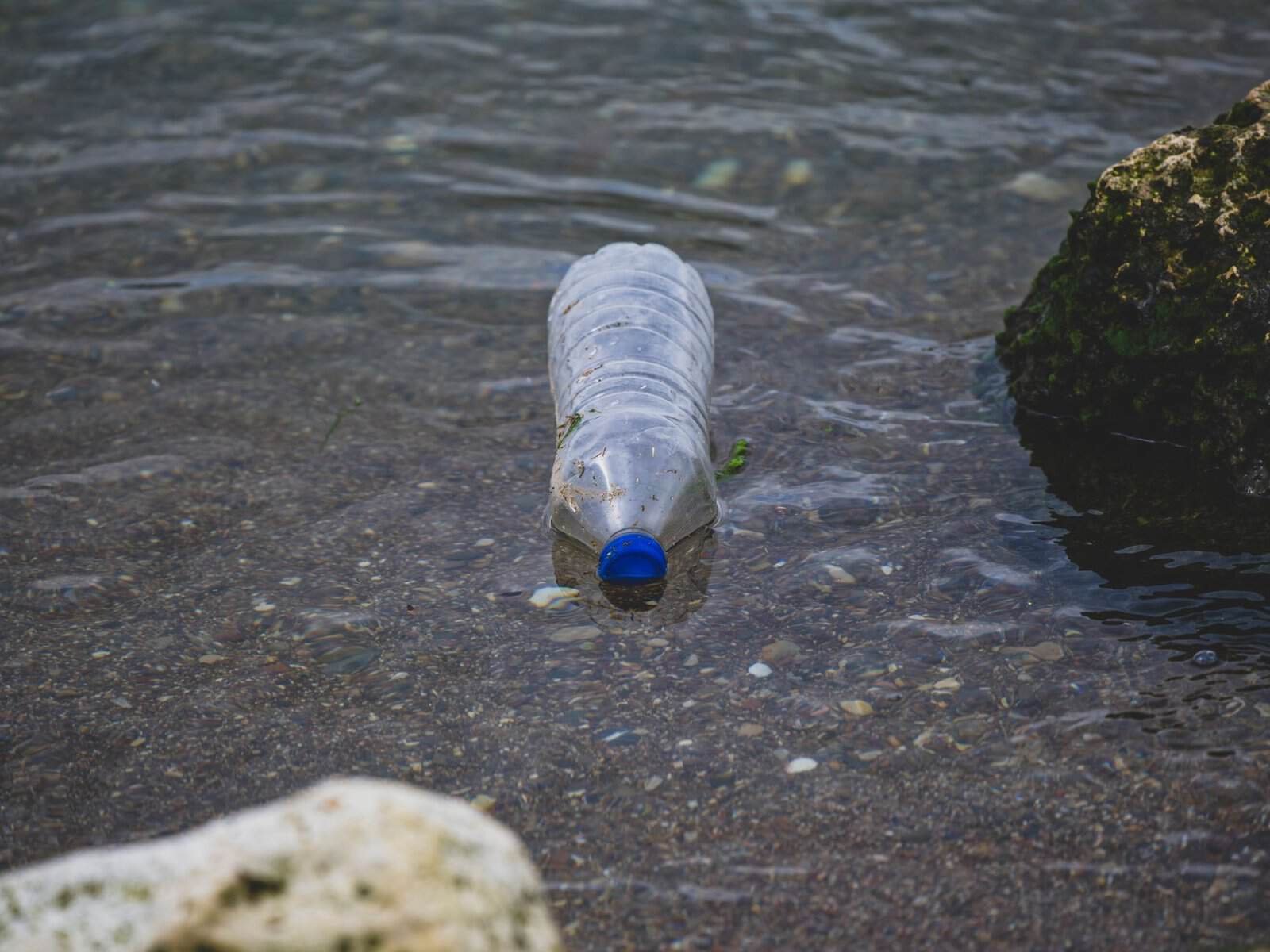
In a small town called Biaora, tucked into Madhya Pradesh’s Rajgarh district, there’s a river called the Ajnar. For years, it had become something locals tried not to look at too closely — its water thick with plastic bottles, tangled weeds, algae blooms, and the slow accumulation of household waste that nobody quite remembers dumping, one bag at a time, until a river disappears under it.
Then, on January 26, 2026 — India’s Republic Day — a 20-year-old student decided he was going to do something about it. Alone.
His name is Surendra Singh Choudhary. Online, where he began documenting what he was doing, people came to know him as Bittu Tabahi.

One Person, One River, No Shortcuts
There was no machinery at first, no government program, no NGO behind him. It was just a young man wading into a polluted river with his hands and whatever basic tools he could manage, pulling out plastic, clearing algae, hauling away the debris that had settled into the riverbed over what was likely years of neglect. He filmed it. Not for spectacle, but the way people often do now when they want a record of something. And it was a kind of proof, day after day, that the work was actually happening.
That record is what made the difference. Choudhary posted the footage on Instagram: the river as it was, choked and grey-brown, and then, stretch by stretch, the river as it became — clearer, moving, alive again. It’s a simple visual argument, and it’s a powerful one, because it doesn’t require anyone to trust a claim. You can just see it.
Slowly, people started to notice. Then, in Biaora itself, the state took notice too. Madhya Pradesh Chief Minister Mohan Yadav met Choudhary and publicly praised what he’d done, and local municipal authorities in the town followed up by providing machinery to support the cleanup. Apparently, it was a meaningful shift, because the sheer volume of waste built up in a small-town river is often more than any one person can move by hand, no matter how determined they are.
The Message From Rotterdam
The bigger surprise came on September 4, 2026, from someone half a world away.
Boyan Slat is the Dutch founder and CEO of The Ocean Cleanup, the Netherlands-based organization he started as a teenager after a diving trip in Greece left him disturbed by how much plastic he saw underwater. There were reportedly more plastic bags than fish. That question — why can’t we just clean this up — eventually became a global effort. The Ocean Cleanup has spent over a decade building large-scale systems to remove plastic from the ocean, and, recognizing that oceans can’t be cleaned faster than rivers keep feeding them trash, expanded into building “Interceptors” — floating, often solar-powered devices designed to catch plastic in rivers before it ever reaches the sea.
When a post about Choudhary’s solo effort on the Ajnar River crossed his feed on X, showing the before-and-after images, Slat replied. He didn’t write a paragraph. He didn’t need to.
“Come work for us.”
Four words, from one of the most recognized names in the global fight against plastic pollution, to a college student who had been standing in a river by himself with no funding and no fanfare, simply because he’d decided the water near his home deserved better.
What This Actually Is — and Why That Matters
It’s worth being precise here, because the story is powerful enough without embellishment: this is a public invitation, not a signed contract. There’s no confirmed salary, no confirmed relocation to the Netherlands, no finalized role — at least not yet, based on what has been reported. What is confirmed, and what matters, is that a man who has spent his entire adult life building organizations and technology to fight plastic pollution looked at what a 20-year-old in Rajgarh district had done on his own, and treated it as real, credible, serious work — worth a direct, public offer.
That distinction doesn’t make the story smaller. If anything, it makes it more honest — and more human. Nobody handed Choudhary anything. He didn’t clean the Ajnar River because he expected Boyan Slat to notice. He did it because a river near his home was dying, and he apparently decided that was reason enough to get in the water.
The Part That’s Bigger Than One River
There’s a reason this story has travelled as far as it has, well beyond Rajgarh district, well beyond India. It’s not really about one river, or even one job offer. It’s about what it looks like when someone refuses to wait — for policy, for funding, for permission — to start fixing something broken in their own backyard.
The world’s plastic pollution problem is enormous, global, and often feels abstract — measured in millions of tonnes, in ocean garbage patches the size of countries, in numbers too large to hold onto emotionally. Boyan Slat has spent over a decade trying to build machines that operate at that scale. But the Ajnar River is a reminder that the same problem also lives at a completely different scale: one town, one stretch of water, one person deciding to show up.
Both scales matter. The systems The Ocean Cleanup builds can move tonnes of plastic at once. What Bittu Tabahi did — alone, unpaid, unequipped, filming as he went — did something a machine can’t: it made the problem visible, local, and impossible to ignore for the people who live beside that river. It turned an abstract crisis into a face, a name, and a river that got its color back.
Whatever happens next with Boyan Slat’s offer, that part has already happened. The Ajnar River is cleaner today than it was in January — because one young man in a small town decided that was worth his time, long before anyone was watching.


No responses yet