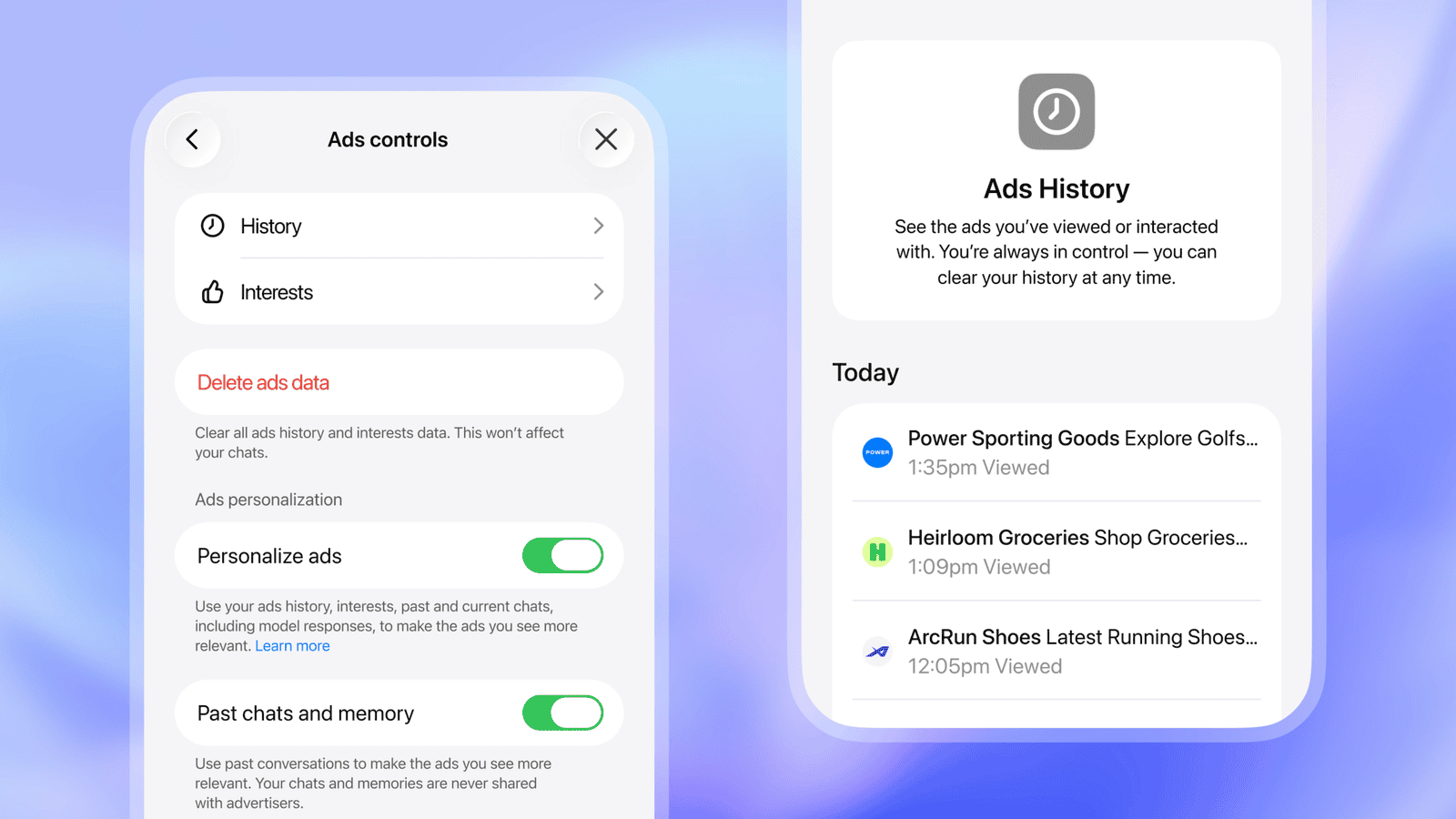
New Delhi-based edtech player UNIVO Education has quietly become a bellwether. On September 7, the company announced it has begun running conversational AI advertising campaigns directly on ChatGPT for its university partners — making it, by its own account, the first major Indian edtech brand to do so. But the more interesting story isn’t really about one company’s marketing campaign. It’s about what UNIVO’s move confirms: that the way Indians discover, evaluate, and eventually buy things is quietly migrating from search boxes to conversations — and that every major AI company now has to decide, publicly, whether it wants to be in the business of selling that conversation.
What UNIVO Actually Did
According to the company, UNIVO has deployed the capability for multiple degree programs under its university partners, and — notably — it built and is operating this capability itself, rather than routing campaigns through a third-party commerce media intermediary, which is how most early advertisers have accessed the ChatGPT ad platform so far.
The company frames the shift in plain terms: a prospective learner researching an online degree is making a decision that can span two to three years, carries real cost, and shapes a career — a decision that has historically been worked out through search engines, comparison sites, and college forums. What’s changing, per UNIVO, is where that research now begins.
“Course discovery is changing right in front of us,” said Nitin Golani, CEO of UNIVO Education. “Learners are no longer typing three words into a search box. They are describing their situation, asking what suits someone working full time in a smaller city, and expecting a considered answer. If that is where the question is being asked, a credible institution needs to be present in that conversation.”
UNIVO says this advertising push sits inside a much larger discovery and engagement stack that it has already built and operates for its university partners — a stack the company says now reaches over 2.5 lakh learners across 16,500 pin codes in India and more than 150 countries. The company frames its move less as a media buy and more as a matter of access: with India expected to bring crores of new learners into higher education over the next decade, UNIVO’s argument is that most of them will start that journey with a question, not an application form — and a brand that isn’t present when that question is typed simply won’t be considered.
The Bigger Trigger: OpenAI Switches On Advertising in India
UNIVO’s move didn’t happen in isolation. It follows OpenAI’s own expansion of ChatGPT advertising into India, which has unfolded in stages over the past few weeks.
OpenAI first rolled out managed ads — meaning ads bought through its own sales team or agency partners — to Indian users in late August, with the company confirming that ads would appear only for logged-in adults on the Free tier and the ₹399-a-month “Go” plan, while Plus, Pro, Business, Enterprise, and Education subscribers remain ad-free. WPP and Omnicom were named as OpenAI’s first agency partners in the market, and reports at the time suggested more than 50 brands were expected to begin advertising on ChatGPT in India within the week.
That was followed on September 4 by the bigger structural shift: self-serve access through OpenAI’s Ads Manager, which lets any business set up and run its own campaigns directly, with daily budgets reportedly starting as low as ₹725 — putting real ad buying inside ChatGPT within reach of small and mid-sized Indian advertisers, not just the WPPs and Omnicoms of the world. OpenAI has said this self-serve rollout covers India alongside Europe, the Middle East, and North Africa simultaneously.
The scale OpenAI is chasing is significant. The company has said its ChatGPT Ads business crossed a $1 billion annualized revenue run rate in under 200 days since launch, and that India — one of ChatGPT’s largest and most active markets, with over 100 million weekly users as of earlier this year — is central to that growth story. OpenAI has also been explicit that ads are labelled, visually separated from ChatGPT’s own answers, and are not supposed to influence the underlying response — a distinction the company has repeated as it tries to avoid the trust backlash that has dogged other platforms experimenting with AI-and-advertising crossovers.
For a company like UNIVO, that self-serve door opening on September 4 is precisely what turned “conversational AI advertising” from a theoretical opportunity into something an Indian brand could actually walk through — and UNIVO appears to have walked through it almost immediately.
Why This Matters Beyond One Edtech Brand
The significance here isn’t the size of UNIVO’s ad spend. It’s the category of decision it represents.
Education is what marketers call a “considered purchase” — high cost, long commitment, comparison-heavy. So is a home loan, an insurance policy, a hospital, an MBA, a used car. These are exactly the categories where people have historically turned to search engines and typed short, blunt queries, then sifted through ten blue links and a forest of SEO-optimised comparison sites to get to an actual answer.
Conversational AI changes that interaction fundamentally. Instead of “best online MBA India,” a user increasingly describes a situation — a full-time job, a tier-2 city, a two-year budget — and expects the AI to reason through it and respond with something tailored. If a brand isn’t structured to be recommended inside that reasoning, it doesn’t just rank lower. It may not exist in the answer at all.
That’s the redefinition of online advertising that UNIVO’s move quietly puts on record: search engine optimisation is being joined — and in some categories, potentially overtaken — by something closer to “answer engine presence.” It’s less about winning a click from a results page, and more about being the option an AI model considers credible enough to mention when someone describes a problem in their own words.
The Wider AI Landscape: Who Else Is In, Who’s Opted Out
If ChatGPT is the first mover on advertising at scale in India, the natural question is whether the rest of the AI field — Google’s Gemini, Perplexity, xAI’s Grok, and Anthropic’s Claude — follows. The honest answer, based on where each company currently stands, is: not uniformly, and not on the same timeline.
Google (Gemini / AI Mode): Google has moved advertising into its AI-powered Search experiences, not into the standalone Gemini app — at least not yet. At its Google Marketing Live event this year, the company unveiled Gemini-powered ad formats inside “AI Mode,” its conversational search feature, including sponsored suggestions woven into AI-generated answers and new AI-driven shopping ad formats. But Google has been careful, and at times contradictory, about the separate Gemini chatbot app itself: in December 2025 its VP of Global Ads stated flatly that there were “no ads in the Gemini app and there are no current plans to change that,” and DeepMind CEO Demis Hassabis said much the same at Davos in January. By March, however, a senior Google Search executive told WIRED that learnings from AI Mode ads “would likely carry over to what we might want to do in the Gemini app down the road,” and Alphabet’s own leadership has since described the company as “open-minded” about it. In short: ads are live in Google’s AI search experience, and the door to the Gemini app itself is open but not yet walked through.
Perplexity: Perplexity actually got here before OpenAI. It started testing sponsored follow-up questions and paid placements as early as November 2024. But it pulled back, quietly pausing new advertiser sign-ups in late 2025, and in February 2026 confirmed, per reporting from the Financial Times, that it was abandoning advertising altogether in favour of a subscription-and-enterprise model, citing concerns that sponsored placements could undermine user trust in its answers. As things stand, Perplexity currently positions itself as an ad-free alternative to ChatGPT.
Grok (xAI/X): Elon Musk has taken the most direct approach of any competitor, announcing that X would begin inserting paid placements directly into Grok’s responses, with the explicit stated goal of funding the computing costs behind the model. Since then, X has rebuilt its Ads Manager around Grok, using the model for ad targeting, brand safety checks, and campaign guidance, with xAI reportedly hiring engineers specifically to embed Grok deeper into X’s auction and ad-ranking systems. Unlike OpenAI’s approach, Grok’s ad integration is closely tied to X’s broader advertising business rather than positioned as a standalone product.
Claude (Anthropic): Anthropic has taken the opposite position from OpenAI, Google, and X. Its products remain ad-free, and the company does not let advertisers pay to have Claude promote things in conversation — a stance it has maintained even as competitors move toward conversational advertising at scale.
What It Means for India
Put together, the picture is one of a genuinely divided industry, not a uniform rush toward monetising conversations with ads. OpenAI is betting aggressively that ads — done transparently, and kept separate from the model’s actual reasoning — can coexist with a billion weekly users. Google is testing the waters in Search first, treating its standalone assistant more cautiously. Grok is leaning into ads as core infrastructure. Perplexity and Anthropic have each, in their own way, decided that staying ad-free is itself a competitive and trust-based differentiator.
For Indian brands, that split matters practically. Right now, ChatGPT is the only major conversational AI platform in India where a business can actually buy a self-serve ad placement — which is exactly the gap UNIVO has stepped into first. Whether Google eventually opens the Gemini app to advertisers, whether Grok’s ad model expands meaningfully into the Indian market, or whether Perplexity’s ad-free stance holds as a long-term differentiator, will shape where marketing budgets go next. But for now, the practical reality is simple: one platform has built the pipes, and one Indian company has decided not to wait to find out whether the pipes work.


No responses yet