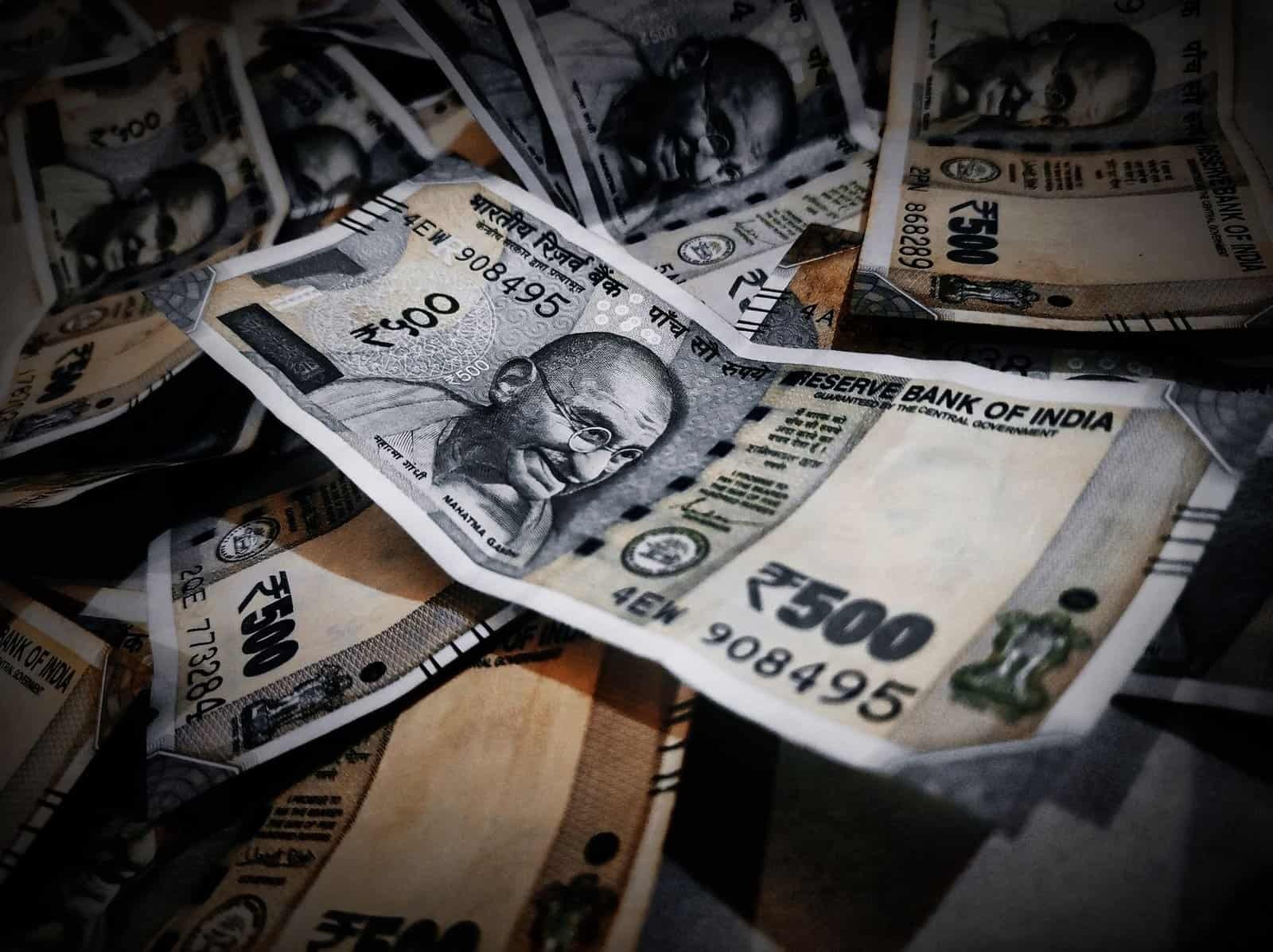
India’s foreign exchange reserves climbed to an all-time high of $729.33 billion in the week ended August 21, 2026, according to Reserve Bank of India (RBI) data reported by Reuters (Business Recorder, Aug 28, 2026). The kitty has now risen for eight straight weeks, adding roughly $63 billion in that stretch and surpassing the previous record of $728.5 billion set in February 2026.
On paper, this should be unambiguously good news for the rupee. Bigger reserves mean a bigger war chest for the RBI to defend the currency, and rising reserves are usually read as a sign of strong capital inflows. Yet the rupee has stayed stubbornly weak — closing at 95.45 against the dollar on August 27, 2026 (ThePrint/PTI), still one of Asia’s worst-performing currencies for the year, and only about 1.7% off the record low of 96.84 it touched on May 20, 2026 (Investing.com). The gap between a record reserve pile and a still-weak currency is the puzzle this article tries to unpack — using only reported data and named sources, without speculation beyond what analysts have publicly said.
1. Much of the “record reserves” is inflows the RBI is actively absorbing — not letting through to the rupee
The surge isn’t organic trade-related money flowing into the economy; it is substantially the result of a deliberate RBI intervention programme. In June 2026, the central bank rolled out a package to attract dollars, including discounted hedging facilities for overseas borrowings by state-run firms and banks, and a free-of-cost hedging facility for banks raising overseas FX deposits (Business Recorder). Between June 5 and August 21, the RBI received close to $73 billion under these schemes — about $65 billion of it through FCNR(B) non-resident deposits — and brought the closure of the deposit-hedging window forward by a month to end-August because the response was so large (Business Recorder).
Anindya Banerjee, Head of Commodity and Currency Research at Kotak Securities, put the scale in context: the scheme has drawn nearly $73 billion so far — “roughly two-and-a-half times what the celebrated 2013 scheme raised” — and could reach $85–90 billion once the December window for external commercial borrowings closes (ThePrint/PTI). Crucially, Banerjee noted that this has created “a formidable war-chest,” but that the “rupee’s appreciation potential remains largely unspent” — meaning the RBI is choosing to bank the dollar inflows into reserves rather than letting them push the rupee meaningfully higher (ThePrint/PTI).
Gaura Sen Gupta, chief economist at IDFC First Bank, added that “the rise in FX reserves is a combination of RBI buying dollars during that week and the rest is revaluation gain,” pointing out that the FCNR-B swap window itself is driving dollar purchases as banks race to lock in deposits before the scheme’s closure (Business Recorder). Separately, for the week ended August 21, $2.8 billion of the $12.4 billion weekly reserve gain came simply from the rising value of the RBI’s gold holdings — a valuation effect, not fresh dollar-buying power (Business Recorder). Trading Economics also reports that the RBI “has intervened almost daily over the past two weeks,” particularly whenever USD/INR moved toward the 95.60–95.80 range, deliberately capping rupee gains (Trading Economics).
2. A widening trade deficit is generating fresh dollar demand that offsets the inflows
Even as reserves hit records, India’s trade gap has been getting wider, not narrower. The merchandise trade deficit widened to a six-month high of $31.98 billion in July 2026, as imports surged to an all-time monthly high of $76.22 billion — driven by costlier oil, a 44% year-on-year jump in electronics imports (including chips), and a near-5% rise in gold imports to $4.16 billion (Business Standard). That followed a June 2026 deficit of $30.43 billion — itself the widest June deficit on record, with imports up 31% year-on-year to $70.84 billion (Trading Economics).
Cumulatively, India’s merchandise trade deficit for April–July FY27 widened to $118.60 billion, up from $96.66 billion in the same period a year earlier (Trading Economics). Including services, the overall trade deficit for the four months stood at $49.43 billion versus $32.32 billion a year ago (Goldmine Stocks). Every dollar of that deficit represents demand for foreign currency from Indian importers — a constant headwind pressing against the rupee that the RBI’s reserve-building inflows have to work against, rather than add to.
3. Elevated crude oil prices remain the single biggest external pressure point
India imports roughly 90% of the crude oil it consumes, so oil price shocks translate quickly into a wider import bill and currency pressure (Whalesbook). Crude oil imports were valued at $18.31 billion in July 2026, with Brent crude trading between roughly $72 and $95 a barrel over the month amid the prolonged Strait of Hormuz disruption that began on February 28, 2026 (Goldmine Stocks). Tata Mutual Fund analysts have estimated that every $10-per-barrel rise in crude adds roughly 45 basis points to retail inflation and widens the current account deficit by 30–40 basis points (Forbes India). Brent has since eased — to around $87.30 a barrel by late August — and that decline, alongside RBI intervention, is one reason the rupee has stabilised somewhat near the 95–96 band rather than testing fresh record lows (Trading Economics).
4. US tariffs tied to Russian oil purchases have weighed on trade competitiveness
Rupee weakness through much of 2025–26 has also been linked to US tariff actions. Reports through late 2025 and into 2026 tracked the rupee sliding to successive record lows as President Donald Trump threatened, and later escalated, tariffs on Indian goods over New Delhi’s continued purchases of Russian oil — with one report citing a potential 50% tariff overhang that “hammered Indian export competitiveness” through the first half of 2026 (NAGA; Business Standard). Tariff-driven uncertainty tends to dent both export earnings and investor sentiment simultaneously — a double drag that reserve accumulation alone cannot offset.
5. Foreign portfolio flows have only recently turned positive, after months of outflows
Foreign portfolio investors (FPIs) pulled out nearly $28 billion from Indian markets over the four months before August 2026, a sustained drag on the rupee that has only recently started to reverse — Trading Economics notes FPIs bought a net $2.5 billion of Indian equities in August 2026 (Trading Economics). A few weeks of inflows are not enough to undo months of outflows, and the market appears to be treating the shift cautiously rather than as confirmation of a durable turnaround. DBS Bank senior economist Radhika Rao has said a durable turnaround in the rupee’s underlying weak trend requires either a sustained fall in oil prices or a genuine resumption of FPI inflows — not merely a reserve-building exercise (Forbes India).
6. A strong dollar globally is compounding India-specific pressures
Independent of anything happening in India, the US dollar itself has been firm on shifting expectations about the Federal Reserve’s rate path. Trading Economics reported the dollar index near an eight-day high in late August 2026 after US inflation data revived expectations of a September Fed rate hike, even as markets awaited Fed Chair Kevin Warsh’s Jackson Hole remarks for further guidance (Trading Economics). A generally strong dollar makes it harder for any emerging-market currency, including the rupee, to appreciate meaningfully even when that country’s own fundamentals (such as reserves) are improving.
The bigger picture: reserves are a buffer, not a lever
Put together, these threads point to one underlying reality that RBI officials and market economists have both acknowledged: reserves and the exchange rate are not mechanically linked. The RBI’s own approach, as multiple reports note, has “historically used reserves as a buffer to smooth excessive currency fluctuations rather than defend a specific exchange rate level” (Bitcoinworld). In the current episode, the central bank appears to be doing exactly that — absorbing a wave of NRI-deposit and hedging-scheme dollar inflows into reserves, intervening to cap rupee gains within a 95–96 operating band, while a wider trade deficit, elevated (if easing) oil prices, tariff-related trade friction, and only recently-turning FPI flows continue to generate offsetting dollar demand.


No responses yet