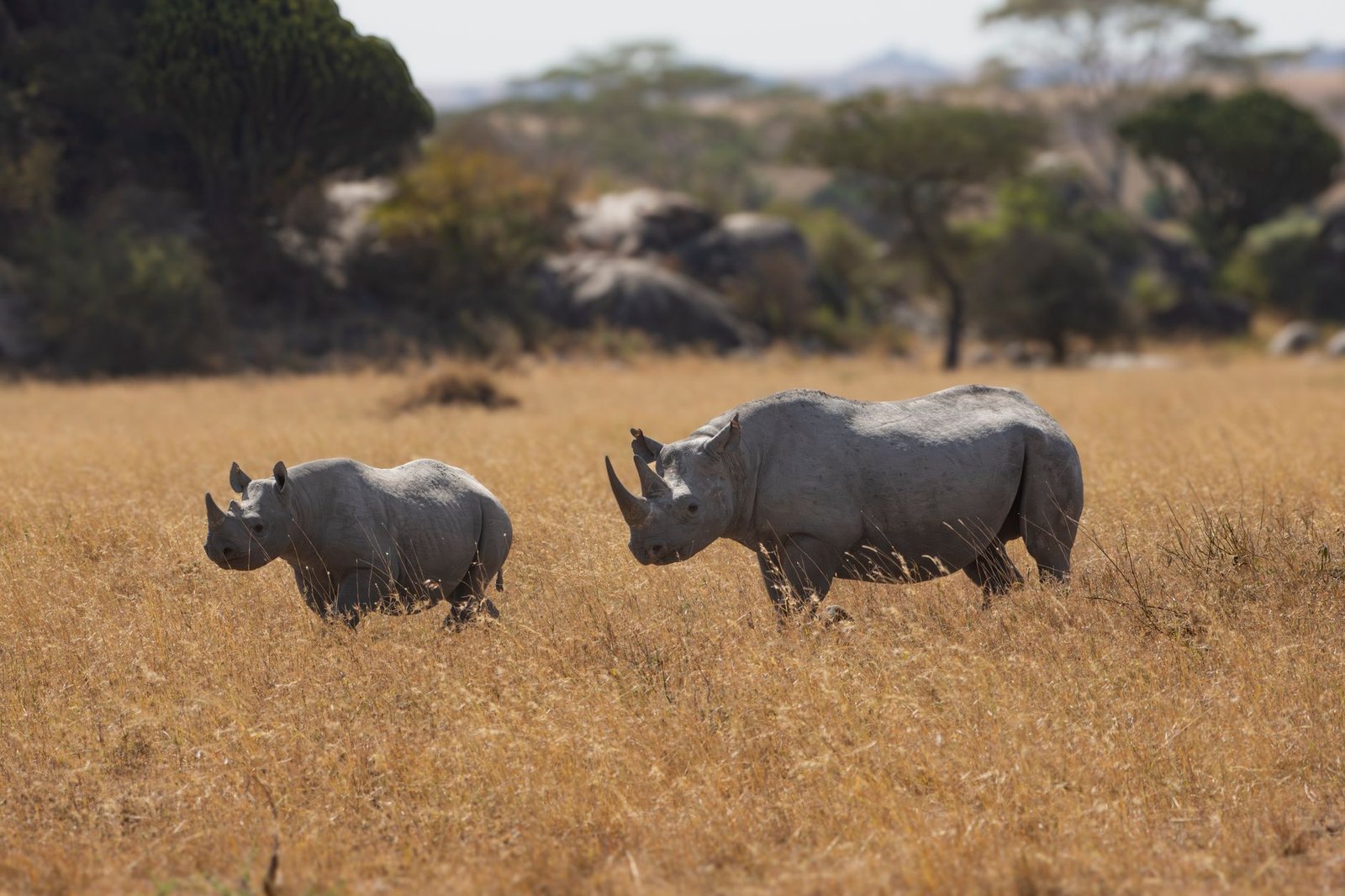
For decades, the story of rhino conservation has been told almost entirely through the lens of poaching — organized crime syndicates, illegal horn markets, and the grim arithmetic of animals killed for a growth made of nothing more than keratin, the same protein in human fingernails. That story is still true. But as the world marks World Rhino Day on September 22, 2026, conservation scientists are increasingly pointing to a second, less visible threat that’s reshaping rhino survival odds across two continents: climate change is now hitting Africa’s and Asia’s rhino populations through opposite ends of the same crisis — drought on one side, catastrophic flooding on the other.
The climate threat, upfront: two continents, two opposite disasters
In Africa, home to the white and black rhino, the danger comes from water disappearing. Researchers at the wildlife charity Helping Rhinos note that rising temperatures, prolonged droughts and water scarcity are steadily degrading rhino habitat, reducing food availability and stressing ecosystems in ways that compound the pressure poaching already puts on fragile populations. The International Fund for Animal Welfare (IFAW) reported that at the end of 2024, Africa’s white rhino population had declined 11.2% year-on-year, concentrated mainly in South Africa and Namibia — a drop IFAW attributes to a mix of drought, policy shifts and funding shortages that have made population management increasingly difficult, on top of ongoing poaching pressure.
In Asia, it’s almost the mirror opposite: too much water, arriving too violently. The greater one-horned rhino — found almost entirely in India, Nepal and Bhutan — depends on the annual monsoon flooding of India’s Brahmaputra River basin, which rejuvenates the grasslands its habitat needs to survive. But conservation biologist Dr. Abishek Goswami has warned that while rhinos are well-adapted to these floodplain ecosystems, extreme flood and drought events are expected to increase in both frequency and severity because of climate change — and since the vast majority of the species lives concentrated in just a handful of protected parks, that makes climate change a very real, growing threat to the species’ long-term recovery, not merely a seasonal inconvenience.
Kaziranga National Park in Assam — home to roughly two-thirds of the world’s greater one-horned rhinos — illustrates this starkly. The park needs its annual floods ecologically; when the monsoon skipped Kaziranga one recent year, park officials were reportedly more worried, not less, since the flooding flushes out choking aquatic weeds and renews the grassland. The problem is that floods have grown more extreme even as some years bring longer stretches of drought in between. Recorded rhino deaths during Kaziranga’s monsoon floods have shown a downward trend in recent years as rescue operations have improved, but the underlying flood intensity remains a persistent seasonal threat, as the chart below shows.

Beyond Kaziranga, the risk extends further into the eastern Himalayan foothills. Jaldapara National Park in West Bengal, another key greater one-horned rhino habitat, was inundated during severe floods in late 2025, forcing 13 rhinos to stray outside the park and be rescued, according to forest officer Parveen Kaswan. Jaldapara sits downstream of rivers originating in Bhutan and Tibet — a region with more than 2,600 glacial lakes, at least 25 of them classified high-risk for glacial lake outburst floods (GLOFs), a hazard scientists expect to intensify as Himalayan glaciers continue warming and retreating.
So how many rhinos are actually left?
The most authoritative current figures come from the International Rhino Foundation’s State of the Rhino 2025 report, compiled with the IUCN Species Survival Commission’s African and Asian Rhino Specialist Groups and TRAFFIC. As of the end of 2024, the global wild rhino population across all five species stood at approximately 26,700 — a number that masks sharply different fortunes species by species.

- White rhino (Africa): 15,752, down from 17,464 in 2023 — a significant one-year decline driven by poaching pressure and drought conditions, mainly in South Africa and Namibia. IUCN Red List status: Near Threatened.
- Black rhino (Africa): 6,788, up from 6,195 in 2022 — a 5.2% increase that IFAW calls a hard-won victory for rangers and community conservation programs. IUCN status: Critically Endangered, but with an increasing trend.
- Greater one-horned rhino (Asia — India, Nepal, Bhutan): 4,075, up from 4,014 in 2022, continuing a recovery from under 200 individuals in 1900. IUCN status: Vulnerable, increasing.
- Javan rhino (Indonesia): Approximately 50, down from an estimated 76 — a decline the IRF attributes entirely to poaching losses; only a single known population survives, confined to Ujung Kulon National Park on Java. IUCN status: Critically Endangered.
- Sumatran rhino (Indonesia): 34–47 individuals, essentially unchanged since 2022, scattered across fragmented forest habitat in Sumatra. IUCN status: Critically Endangered.
Two of five species are genuinely recovering. Two are edging toward the point where recovery becomes extremely difficult. The white rhino — long the conservation success story of the group — is now the one showing worrying signs of reversal.
Poaching hasn’t gone away — it’s just no longer the whole story
None of this displaces poaching as a central threat. The illegal trade in rhino horn, driven by demand in some East and Southeast Asian markets for use in traditional medicine (despite no scientific evidence supporting its purported effects) and as a status symbol, remains the primary driver of decline for the most endangered species. Between 2019 and 2023 alone, 26 Javan rhinos were killed for their horns — a catastrophic toll for a population now down to roughly 50 animals in a single park.
What’s changed is how experts now frame the relationship between the two threats. Olivia Smith of Helping Rhinos put it directly: climate change isn’t a direct driver of poaching in the way that horn demand is, but it’s increasingly recognized as a significant, compounding threat layered on top of it — degrading habitat and concentrating already-vulnerable populations into smaller areas, which paradoxically can make poaching logistically easier even as it makes ecological survival harder.
The bigger picture this World Rhino Day
World Rhino Day, observed every September 22 since 2011, exists to focus global attention on all five surviving rhino species at once — a deliberate choice, since the crises facing African and Asian rhinos have historically been reported as separate stories. What the 2026 picture makes clear is that they’re converging around a shared driver. Whether it’s drought thinning out browse in Namibia’s rangelands or an intensifying monsoon threatening to drown calves in Assam’s floodplains, climate change is increasingly the variable that determines whether decades of hard-won anti-poaching and habitat-protection work translates into lasting recovery — or gets eroded by forces conservation budgets and ranger patrols alone can’t control.
The conservation successes are real and worth marking: the greater one-horned rhino’s rise from under 200 individuals to over 4,000, and the black rhino’s steady climb back from a 98% population collapse between 1960 and 1995, are both genuine, science-documented recoveries. But as this year’s data shows, that progress isn’t uniform, isn’t guaranteed to continue, and increasingly depends on how well conservation strategies adapt to a climate that’s making both the wettest and driest extremes more dangerous for the animals that depend on a stable, predictable landscape to survive.


No responses yet