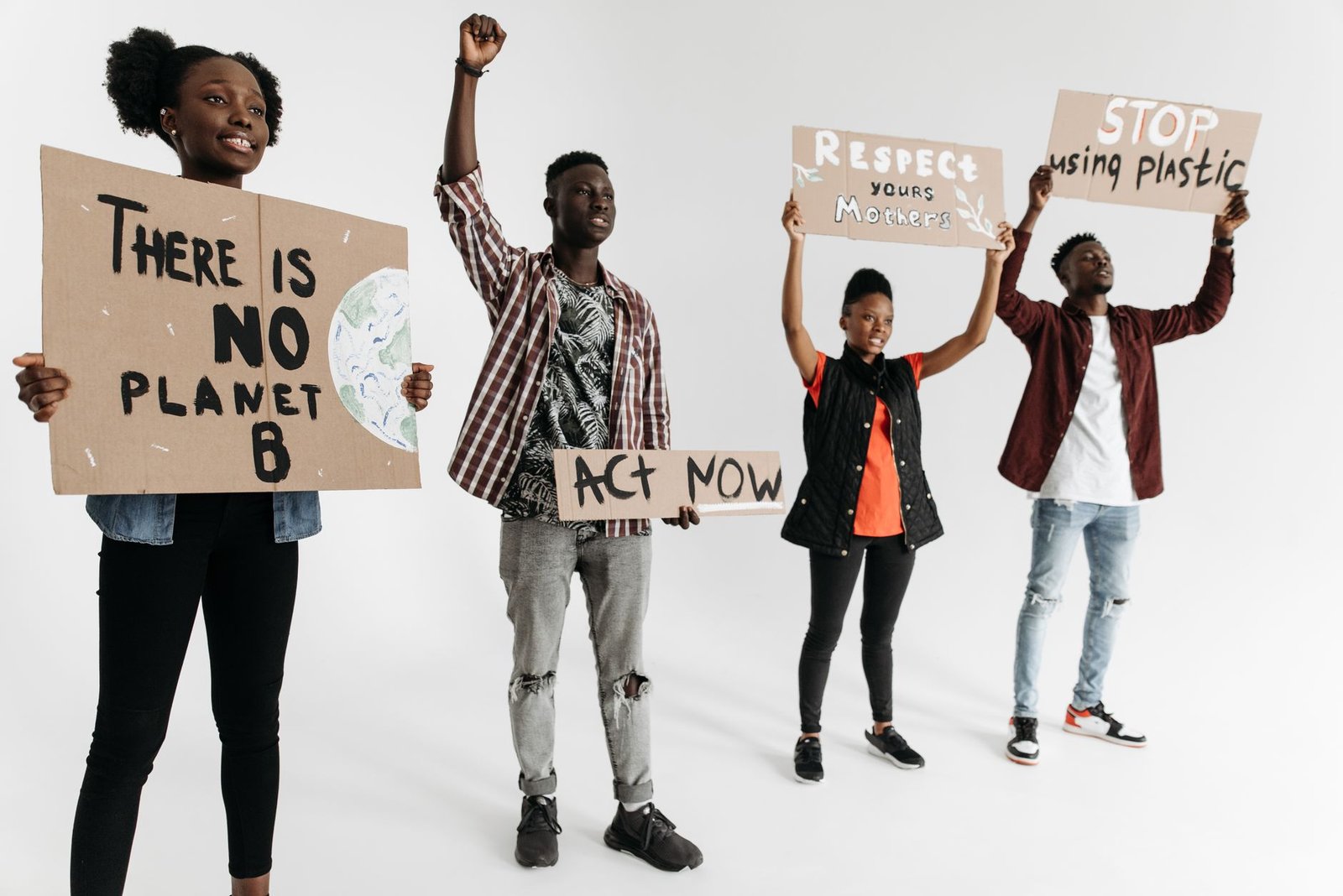
Activism at its best has changed the world. At its worst, it has been used as cover, a means of steering public opinion, moving funds and building pressure for goals that have little to do with the cause on the banner. As Global Activism Day approaches, the difference between the two is worth setting down plainly, because the second kind is eating into the trust the first kind depends on.
What cause-driven activism has achieved
The case for the real thing is strong, and it is measurable. A widely cited study by Maria Stephan and Erica Chenoweth in International Security (2008) analysed 323 violent and nonviolent resistance campaigns from 1900 to 2006 and found that major nonviolent campaigns succeeded “53 percent of the time, compared with 26 percent for violent resistance campaigns.” The authors attribute that to two factors: regime violence against nonviolent movements tends to backfire, and such movements are seen as less extreme and more open to bargaining. They also acknowledge a possible success bias, because small nonviolent movements crushed early may not be recorded.
India has its own proof. The Chipko movement began in 1973 in the Himalayan region of Uttarakhand, led mainly by rural women and villagers who embraced trees to stop government-backed logging, according to Britannica. Its roots were local and concrete: roads built after the 1963 border conflict had opened forests to outside logging firms, villagers lost access to the food, fuel and water they relied on, and floods in 1970 killed more than 200 people. In 1974, women of Reni village led by Gaura Devi stood their ground until loggers withdrew, and the protest led to a ten-year ban on commercial logging in the Alaknanda valley. A 1980 appeal by Sunderlal Bahuguna brought a 15-year ban on commercial felling in the Uttarakhand Himalayas. Nobody needed to ask who was behind Chipko. The grievance belonged to the people marching.
That is what cause-driven activism looks like: a visible grievance, accountable leaders, a demand that can be met or refused, and a community that bears the consequences.
When the cause becomes a cover
The trouble starts when the machinery of activism, which includes funding, networks, hashtags and credibility, is borrowed for an agenda set elsewhere. History offers documented cases.
Cold War culture. The Congress for Cultural Freedom, which ran from 1950 to 1967, was in the words of historian Eric Pullin “the largest and longest of the covert operations run by the Central Intelligence Agency.” It built affiliated organisations across the non-communist world that sponsored concerts, art exhibitions and scholarly lectures. Its CIA funding was not public until The New York Times and Ramparts revealed it in 1966 and 1967, and the Congress lost its reputation and stopped functioning effectively within months. The people attending those events believed they were taking part in independent intellectual life. They were not told who was paying.
The democracy-promotion debate. The National Endowment for Democracy (NED) was founded in 1983 and is funded mainly by the US Congress. In a 1991 interview with The Washington Post, its then president Allen Weinstein said: “A lot of what we do today was done covertly 25 years ago by the CIA.” The remark is still quoted by critics such as Stephen Kinzer, who argued in The New York Review of Books in 2021 that NED’s “regime-change mission has not changed.” NED rejects that. Its representative, Christine Bednarz, wrote in the same exchange that it does not fund protests or opposition groups and does not “foment…rebellions,” and that it is an independent grant-maker answering to its own board. Defenders such as Michael McFaul have argued it is not an instrument of US foreign policy. The dispute is real and unresolved, but the fact that governments from Russia to India have restricted the NED shows how seriously the issue is taken. Russia declared it “undesirable” in 2015, and India’s Home Ministry placed it on a watchlist in 2016, requiring prior permission before it funds other NGOs or individuals.
Manufactured grassroots. The clearest recent evidence involves not a Western agency but Russia. Two reports prepared for the US Senate, by the cybersecurity firm New Knowledge and by Oxford University’s Computational Propaganda Project with Graphika, found that the Internet Research Agency, a St. Petersburg troll farm, ran operations across every major social platform and extensively targeted African-American communities. The New Knowledge report said the aim appeared to be “developing black audiences and recruiting black Americans as assets.” Some operatives even helped organise real-world rallies that Americans attended in person. The marchers were sincere. The organiser was not.
Taken together, these cases show a pattern: the form of grassroots activism, with its credibility, is copied by actors whose interest is influence rather than the cause.
The damage to the real thing
The most lasting cost falls on genuine activists. Once the public learns that some campaigns were steered from outside, suspicion spreads to all of them. Villagers protesting a dam, a union striking over wages, or a parents’ group fighting a polluting plant can all be dismissed as someone’s proxy.
India’s debate shows how this plays out. A 2014 Intelligence Bureau report, leaked and published in part by The Indian Express, alleged that foreign-funded NGOs were working to “take down” Indian development projects and claimed that such activity reduced GDP growth by an estimated 2-3%. It named Greenpeace and other groups and campaigns, from Kudankulam to the Narmada Bachao Andolan. Critics, including The News Minute, noted that the report gave no sources for its GDP estimate, quoted foreign contribution figures but showed no money obtained illegally, and rested its conclusions largely on funding, seminars and demonstrations. The report illustrates the other half of the problem: the “foreign hand” accusation can itself be an agenda, used to discredit legitimate dissent. Human Rights Watch made a similar point about Russia’s “foreign agents” law, which it called “devastating” for environmental groups.
Telling the difference
Readers, donors and editors can ask a short set of questions of any campaign:
- Who pays, and is it disclosed? Genuine movements can be funded from abroad, but they say so.
- Whose grievance is it? A cause-driven movement has a constituency that bears the cost of the problem.
- Is the demand specific? Agenda-driven campaigns often shift targets to suit a larger narrative.
- Who is accountable? Real leaders can be named, questioned and replaced.
- Does the movement survive scrutiny? The ones worth supporting welcome it.
The other side of the argument
None of this settles the matter. Many scholars and practitioners argue that foreign funding for civil society is not the same as foreign control, that pro-democracy groups have often asked for such support, and that the “agenda-driven” label has been used by governments to justify crackdowns on independent organisations. Whether specific NED grants amounted to interference is contested, and Russia’s claim that NED money drove the Euromaidan protests is a government allegation, not an established finding. The strongest defence of true activism is not suspicion of all outside money, but transparency about it.


No responses yet